
FDA Approves a Tucatinib Maintenance Regimen for Advanced HER2-Positive Breast Cancer
On 7 October 2026 the FDA approved tucatinib with trastuzumab and pertuzumab as maintenance therapy for adults with unresectable locally advanced or metastatic HER2-positive breast cancer after induction treatment, based on longer progression-free survival in the HER2CLIMB-05 trial. Overall survival data were not yet mature, and the label carries warnings that include diarrhea and hepatotoxicity.
Just News Desk, Correspondent||4 min read

SILVER SPRING, Md. - The Food and Drug Administration on 7 October approved tucatinib, sold as Tukysa, in combination with trastuzumab and pertuzumab for the maintenance treatment of adults with unresectable locally advanced or metastatic HER2-positive breast cancer after induction therapy, the agency said.
The decision rests on HER2CLIMB-05 (NCT05132582), a randomized, double-blind, placebo-controlled trial of 654 adults. Eligible patients had HER2-positive disease that was unresectable and locally advanced or metastatic, with or without brain metastases, and no evidence of progression after four to eight cycles of induction with trastuzumab, pertuzumab and a taxane. They then received tucatinib 300 milligrams or placebo by mouth twice daily with trastuzumab and pertuzumab, given intravenously or as a fixed-dose subcutaneous combination, until disease progression or unacceptable toxicity. Patients whose tumors were also hormone-receptor positive could continue endocrine therapy.

The main entrance of FDA Building 1 on the agency's White Oak campus in Silver Spring, Maryland. Photo: U.S. Food and Drug Administration, via Wikimedia Commons (public domain). Source page: https://commons.wikimedia.org/wiki/File:FDA_Bldg_1_-_Exterior_With_Circle_(5161374950).jpg
The primary efficacy measure was progression-free survival assessed by investigators using RECIST version 1.1. Median progression-free survival was 24.9 months in the tucatinib arm (95 percent confidence interval 21.3 months to not reached) and 16.3 months in the placebo arm (95 percent confidence interval 12.6 to 18.7 months), for a hazard ratio of 0.64 (95 percent confidence interval 0.51 to 0.80; p-value less than 0.0001), according to the FDA. At the time of that analysis, overall survival data were not mature.
The approval is a maintenance option after chemotherapy-containing induction, not a claim of cure. The FDA said the recommended tucatinib dose is 300 milligrams orally twice daily with trastuzumab and pertuzumab until disease progression or unacceptable toxicity. Tucatinib is marketed by Seagen Inc., a subsidiary of Pfizer, the agency noted.
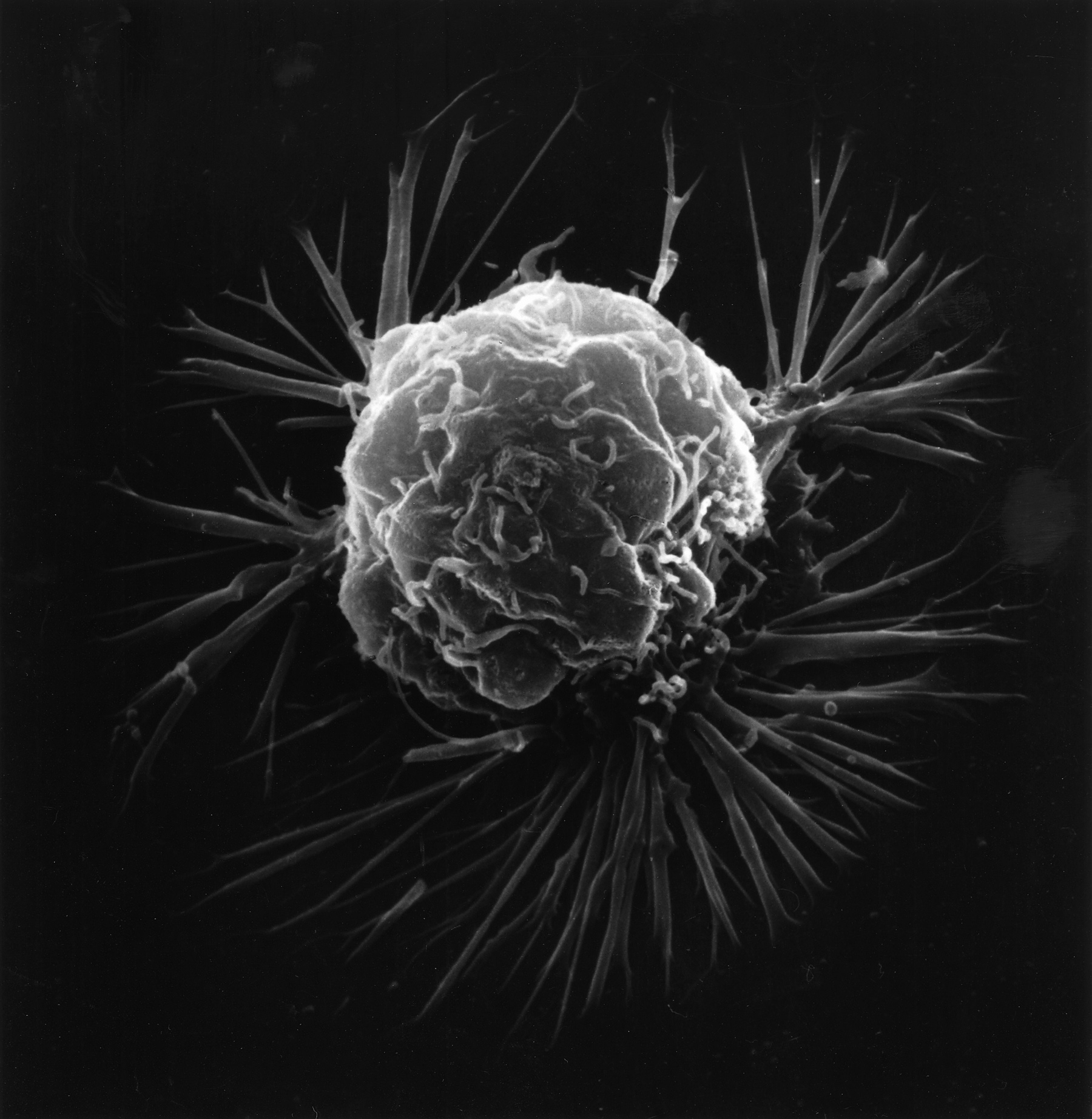
A breast cancer cell photographed with a scanning electron microscope, emphasizing surface topography at high magnification. Image: National Cancer Institute / National Institutes of Health, via Wikimedia Commons (public domain). Source page: https://commons.wikimedia.org/wiki/File:Breast_cancer_cell_(2).jpg
Safety findings temper the efficacy result. The prescribing information includes a boxed warning for hepatotoxicity, as well as warnings and precautions for diarrhea, embryo-fetal toxicity, and increased serum creatinine without an effect on renal function, the FDA said. In the Journal of Clinical Oncology report of HER2CLIMB-05, diarrhea occurred in 72.7 percent of patients on the tucatinib arm, and 13.5 percent discontinued tucatinib because of a treatment-emergent adverse event.
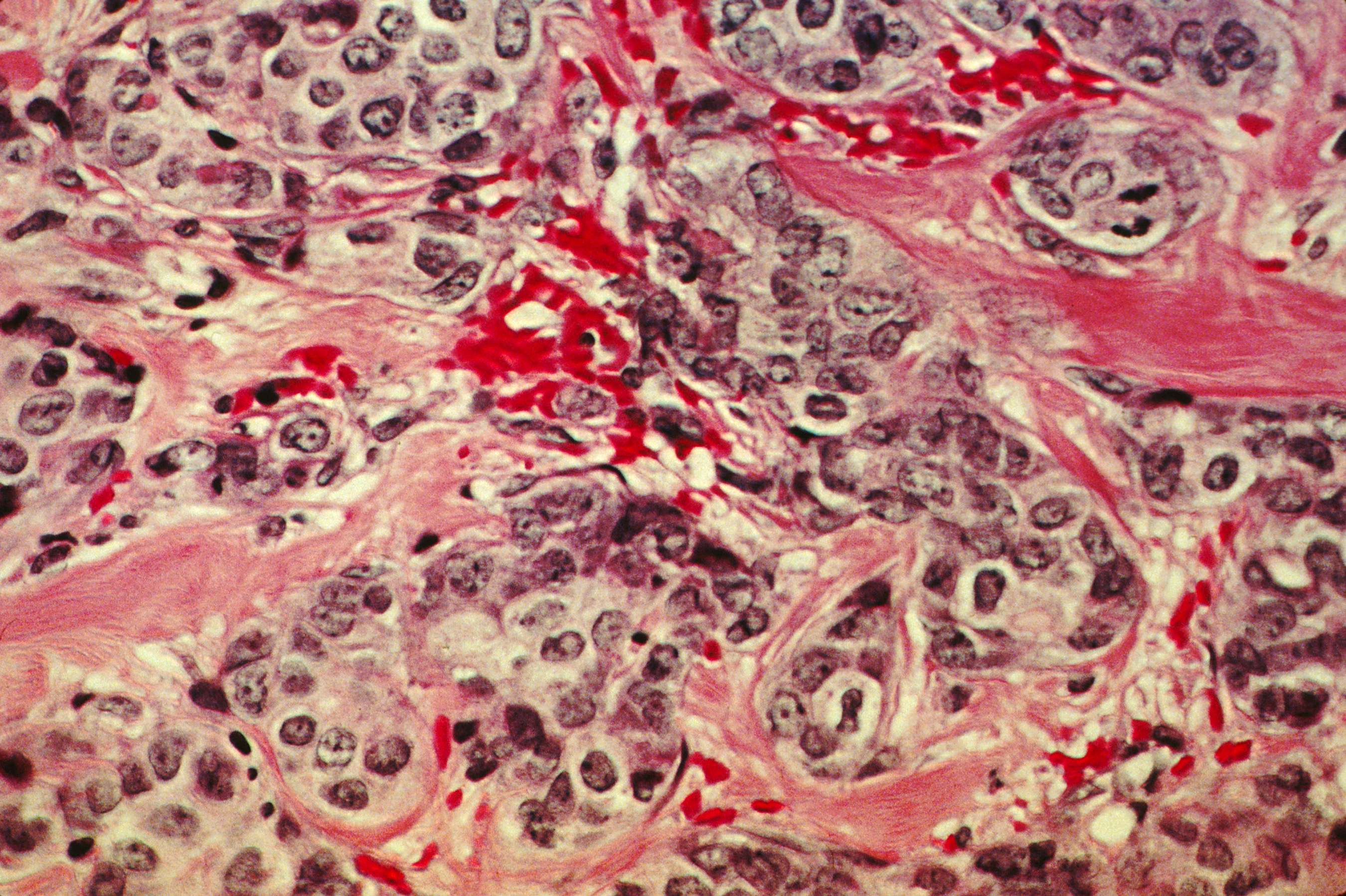
Histological slide of cancerous breast tissue. The pink pathways are normal tissue; the purple cells are malignant. Photo: Dr. Cecil Fox, National Cancer Institute, via Wikimedia Commons (public domain). Source page: https://commons.wikimedia.org/wiki/File:Breast_cancer_cells_(2).jpg
HER2-positive breast cancers overproduce the HER2 protein and have historically been aggressive, though targeted antibodies and related drugs have improved outcomes for many patients. Maintenance therapy aims to keep disease in check after an initial response, without continuing the taxane chemotherapy used in induction. Whether the progression-free survival gain will translate into longer overall survival remains an open question until those data mature.
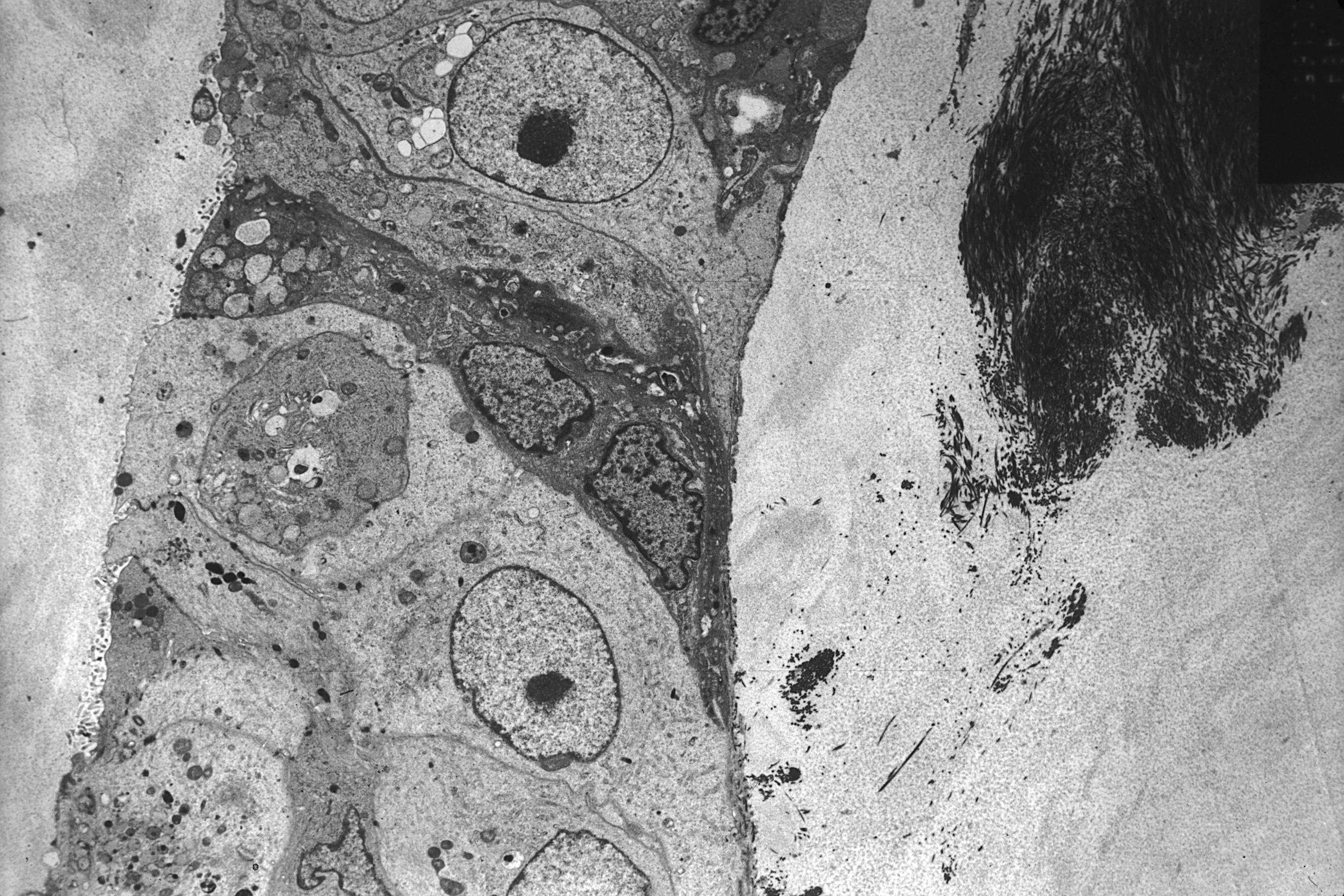
A breast cancer cell seen through an electron microscope. Image: National Cancer Institute / National Institutes of Health, via Wikimedia Commons (public domain). Source page: https://commons.wikimedia.org/wiki/File:Breast_cancer_cell.jpg

Pathway to the main entrance of FDA Building 32 on the White Oak campus in Silver Spring, Maryland. Photo: U.S. Food and Drug Administration, via Wikimedia Commons (public domain). Source page: https://commons.wikimedia.org/wiki/File:FDA_Bldg_32_-_Pathway_to_Main_Entrance_(5161375442).jpg
The primary record is the FDA announcement of 7 October 2026, "FDA approves tucatinib with trastuzumab and pertuzumab for the maintenance treatment of HER2-positive breast cancer" (https://www.fda.gov/drugs/resources-information-approved-drugs/fda-approves-tucatinib-trastuzumab-and-pertuzumab-maintenance-treatment-her2-positive-breast-cancer). Additional safety percentages are from the Journal of Clinical Oncology report of HER2CLIMB-05 (https://ascopubs.org/doi/10.1200/JCO-25-02600; Europe PMC MED/41369677). The images above are public-domain U.S. government files from the National Cancer Institute and the FDA on Wikimedia Commons; no patient photographs or company press images are used.
- health
- medicine
- cancer
- breast-cancer
- fda
- oncology



.jpg)
.jpg)
.jpg)

.jpg)