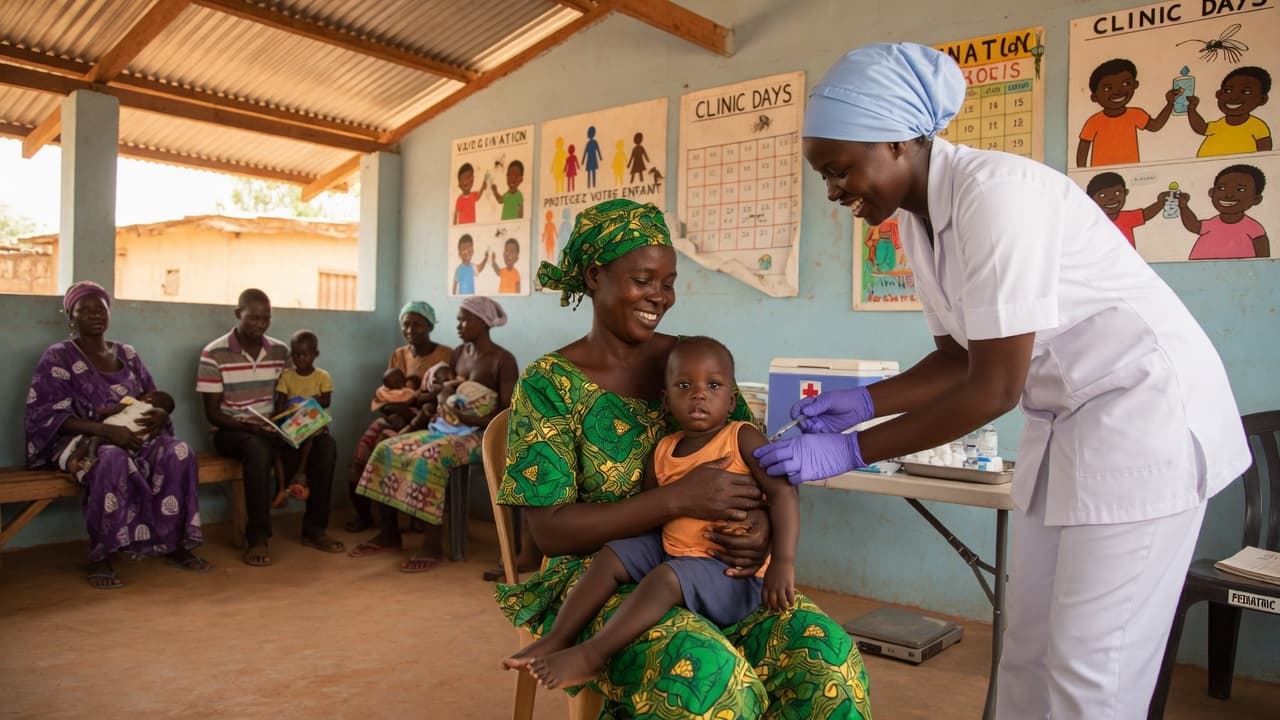
WHO Validates Chile as First South American Country to Eliminate Dog-Transmitted Rabies as a Public Health Problem
The validation, announced 14 September 2026, follows more than five decades without a dog-mediated human case and places Chile third worldwide after Mexico and Bhutan.
Just News Desk, Global health||5 min read

SANTIAGO, Chile - The World Health Organization on 14 September 2026 validated Chile for eliminating dog-transmitted, or dog-mediated, human rabies as a public health problem, making it the first country in South America and the third worldwide to receive that recognition, after Mexico and Bhutan.
Headline photograph: Residents wait with dogs beside a blue vaccination tent and Chilean government banners at an outdoor public dog-vaccination site. Credit: World Health Organization (WHO), posted on the WHO X account. Photographer not named on the post. Source page: https://x.com/WHO/status/2099532097538965821.
The announcement, issued jointly from Santiago, Washington, D.C., and Geneva by WHO and the Pan American Health Organization (PAHO), records a public-health designation rooted in evidence rather than a claim that rabies has vanished from Chile. According to WHO and PAHO, the country's last reported human rabies case transmitted by dogs occurred in 1972. The validation confirms both the sustained absence of dog-mediated human rabies and the systems Chile maintains to keep transmission from returning.
"I congratulate the government and people of Chile on this historic achievement," said Dr Tedros Adhanom Ghebreyesus, WHO Director-General. "This validation reflects decades of commitment to protecting communities from rabies and demonstrates the impact of sustained investment in public health. Chile's success offers valuable lessons for countries working to end human deaths from this preventable disease."
Rabies is almost always fatal once clinical symptoms appear. Dog-mediated transmission still accounts for the great majority of human rabies cases globally, WHO notes, yet it is preventable through animal vaccination, surveillance, and timely post-exposure prophylaxis for people bitten, scratched, or otherwise exposed.
Chile's path, as described by WHO and PAHO, combined free mass vaccination campaigns for dogs and cats, door-to-door outreach, laboratory diagnosis, epidemiological surveillance, monitoring of virus circulation in animals, community education, and reliable access to post-exposure care. More recently, authorities strengthened risk assessment, expanded community-based surveillance, and carried out preventive vaccination in border areas judged at higher risk of reintroduction.
"Chile's achievement is a testament to what sustained regional cooperation can accomplish when countries invest in vaccination, surveillance and access to care," said Dr Jarbas Barbosa, WHO Regional Director for the Americas and Director of PAHO. "It shows that eliminating dog-transmitted rabies is not only possible, but achievable and sustainable when countries work across sectors and maintain the systems needed to protect people and animals."
Formal recognition followed a technical dossier submitted against WHO validation criteria. An independent international expert group convened by PANAFTOSA/PAHO/WHO reviewed that dossier and confirmed that Chile met the established requirements. WHO's validation standard, as summarized by the agencies, requires interruption of dog-to-human transmission resulting in the absence of human deaths from dog-mediated rabies for at least two years, together with demonstrated capacity to prevent re-emergence.
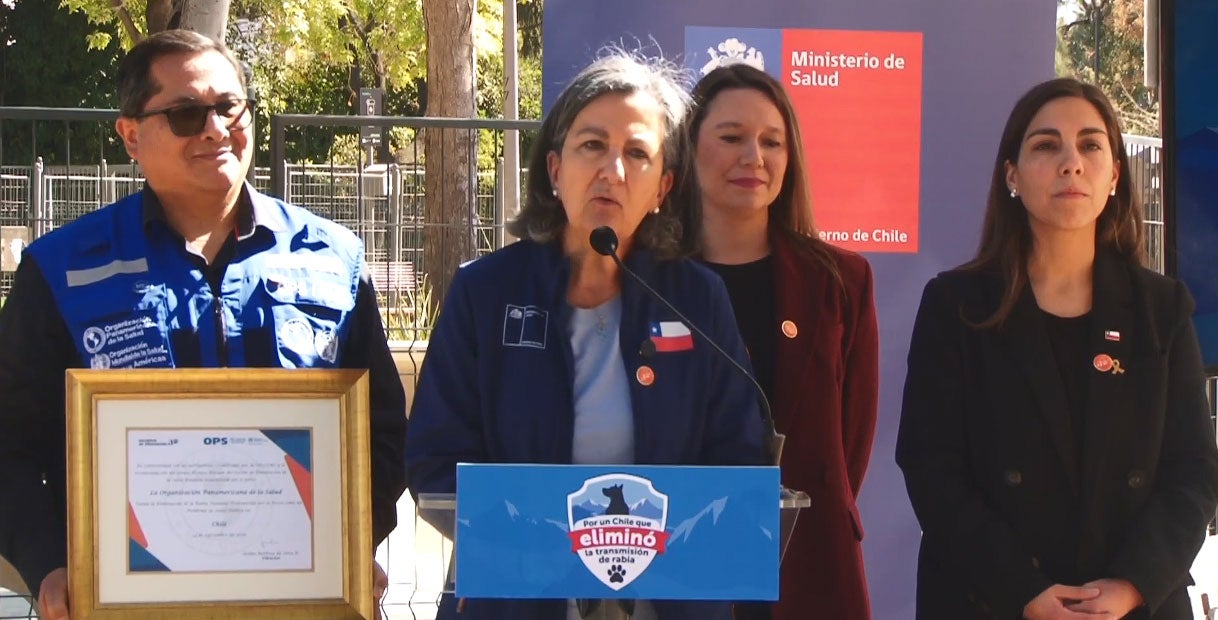
Chile's Minister of Health, Dr May Chomalí, speaks at an outdoor podium beside a PAHO/WHO representative holding a framed certificate, with Ministry of Health banners visible during the validation ceremony. Credit: Pan American Health Organization (PAHO/WHO). Photographer not named on the release page. Source page: https://www.paho.org/en/news/14-9-2026-chile-becomes-first-country-south-america-validated-eliminating-dog-transmitted.
The diploma was received in a ceremony at the Monte Grande kennel (canil Monte Grande) in Las Condes, Santiago, during a mobile pet-vaccination operation attended by Minister of Health Dr May Chomalí, according to Chilean coverage of the event, including Emol and Mediabanco reports dated 14 September 2026. Those accounts place the recognition in the setting where vaccination work continues in public view.
"We are proud to receive this validation. It represents the results of work that has been planted and nurtured over many years through Chile's public policies to eliminate rabies, including pet vaccination and post-exposure prophylaxis for people at risk," said Dr Chomalí, as quoted by WHO and PAHO. "But this achievement would not have been possible without the joint efforts of municipalities, their zoonosis teams and communities. Without communities, without municipalities and without public policy, a certification such as this cannot be achieved."
PAHO notes that human cases of dog-mediated rabies in the Americas have fallen by more than 98 percent since 1983. Chile's validation also contributes to PAHO's Disease Elimination Initiative, which aims to eliminate more than 30 communicable diseases and related conditions in the Americas by 2030. Separately, WHO and PAHO state that Chile's rabies validation is its second neglected tropical disease elimination achievement in 2026, following earlier WHO verification for the elimination of leprosy.
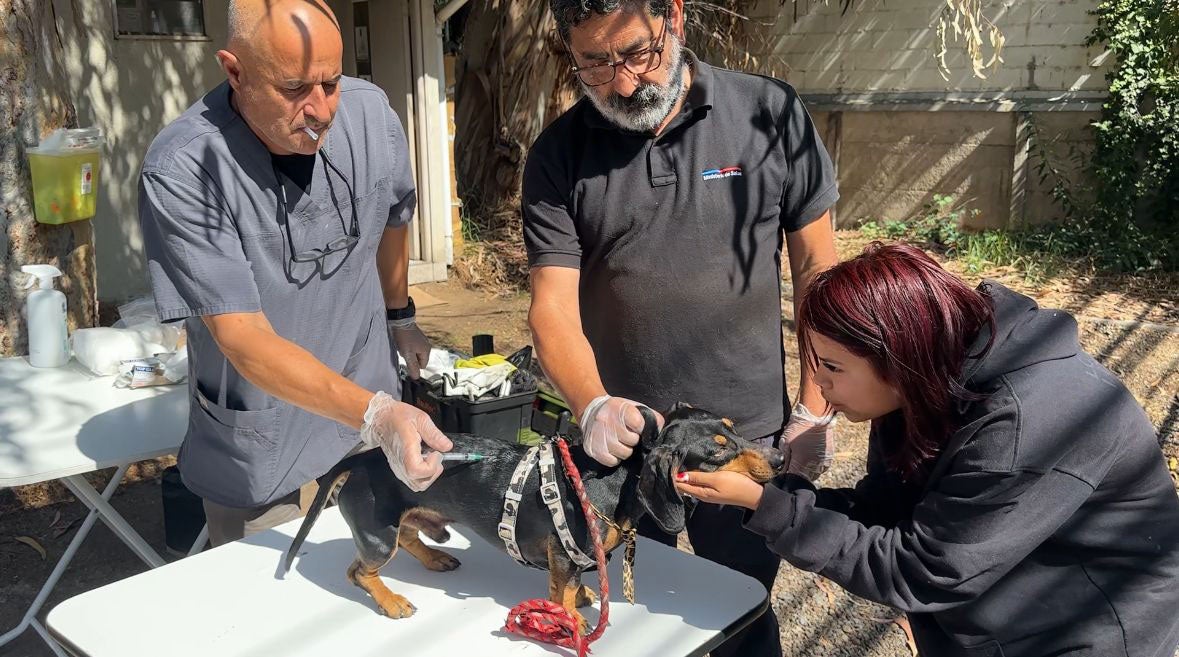
Health workers vaccinate a small dog on an outdoor folding table during a field rabies-vaccination activity in Chile. Credit: Pan American Health Organization (PAHO/WHO), published with the feature "Chile and rabies: A story of elimination." Photographer not named on the story page. Source page: https://www.paho.org/en/stories/chile-and-rabies-story-elimination.
An honest caveat travels with the milestone. Eliminating dog-transmitted human rabies as a public health problem does not mean rabies has disappeared from Chile. PAHO's elimination feature states that the virus continues to circulate in wildlife reservoirs, particularly bats, and that continued surveillance remains essential. Bárbara Hott, head of the Zoonoses and Vectors Department at Chile's Ministry of Health, said in that PAHO account that authorities must maintain capacities "to prevent reintroduction and respond to wildlife rabies, which continues to affect us through its circulation in bats."
That distinction defines the designation. WHO validation records that dog-mediated human rabies has been interrupted under international criteria and that Chile retains the laboratory, vaccination, surveillance, and response systems needed to hold the line. It does not erase the quieter work of watching wildlife reservoirs, educating new generations that never saw dog-mediated human rabies, and keeping post-exposure care available.
Globally, dog-transmitted rabies still causes tens of thousands of deaths each year, primarily in Asia and Africa, WHO and PAHO note. Chile's verified record offers a measured counterpoint: sustained vaccination, One Health coordination across human and animal health, and decades of surveillance can push a preventable zoonosis to the point of formal public-health elimination. The evidence package, the independent PANAFTOSA-convened review, and the agencies' own caveats about wildlife rabies are the story, stated as they state them.
Sources
- WHO news release (14 Sep 2026): https://www.who.int/news/item/14-09-2026-chile-becomes-first-country-in-south-america-validated-for-eliminating-dog-transmitted-rabies-as-a-public-health-problem
- PAHO news release (14 Sep 2026): https://www.paho.org/en/news/14-9-2026-chile-becomes-first-country-south-america-validated-eliminating-dog-transmitted
- PAHO feature, "Chile and rabies: A story of elimination": https://www.paho.org/en/stories/chile-and-rabies-story-elimination
- WHO X post: https://x.com/WHO/status/2099532097538965821
- Emol (ceremony at canil Monte Grande, Las Condes): https://www.emol.com/noticias/Nacional/2026/09/14/1211438/chile-erradica-rabia-de-perros.html
- Mediabanco (ceremony context): https://www.mediabanco.com/chile-se-convierte-en-el-primer-pais-de-sudamerica-en-erradicar-la-transmision-de-rabia-de-perros-a-humanos/
- health
- world
- chile
- who
- paho