Bleached Corals Recover in Weeks After Touching a Healthy Clone, Stanford Scientists Report
In a laboratory study published in Science Advances, Stanford researchers found that bleached coral fragments fully recovered within weeks after brief contact with genetically identical healthy fragments, which fused tissue with them and passed along symbiotic algae. The team cautions the approach is not yet feasible at reef scale.
Just News Desk, Correspondent||6 min read
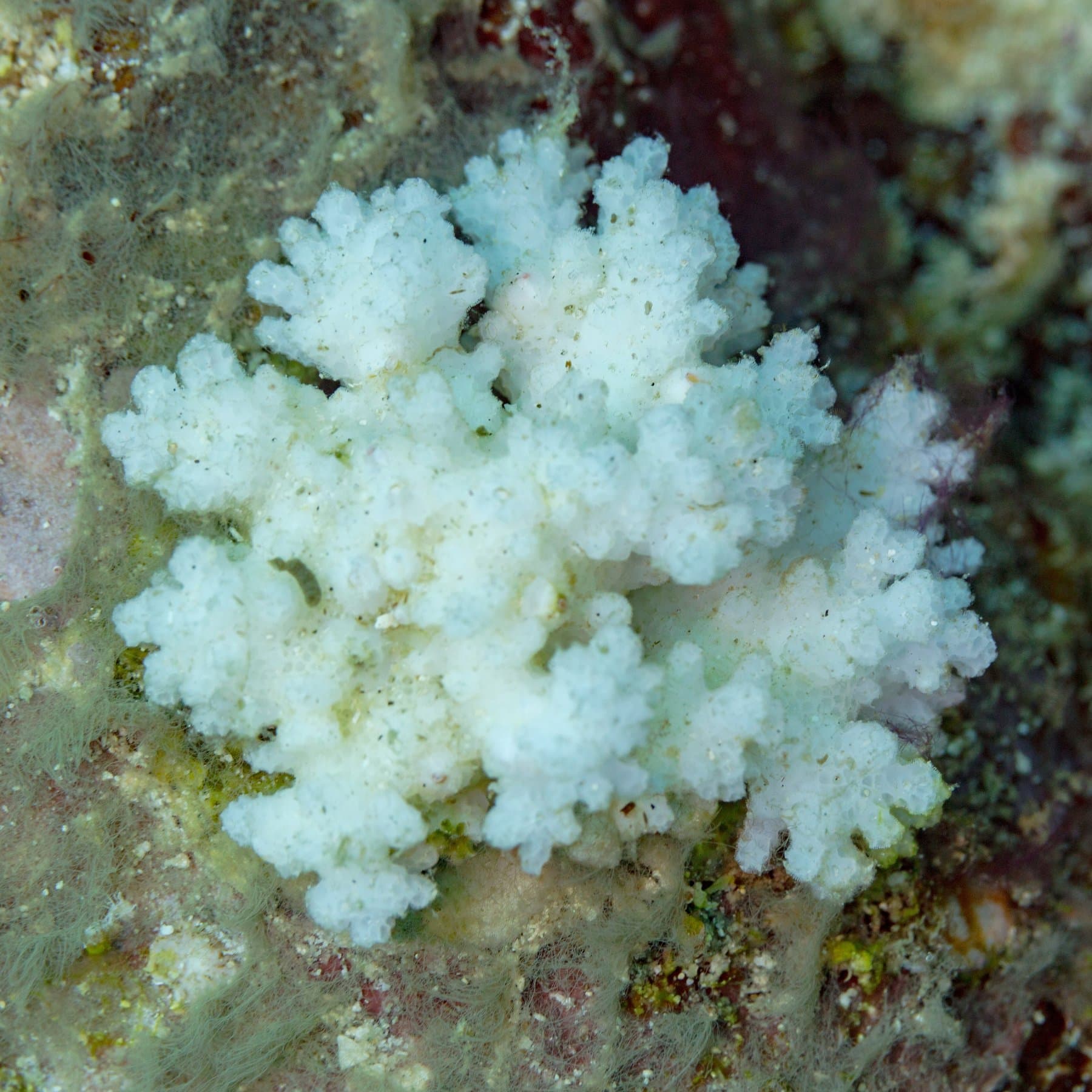
STANFORD, Calif. - Bleached coral fragments that had lost the algae they depend on returned to full health within weeks after brief contact with healthy, genetically identical fragments, Stanford University researchers reported in a laboratory study published on 14 October in Science Advances. The healthy fragments fused tissue with their bleached counterparts and passed along symbiotic algae, the team found, in what the Stanford Doerr School of Sustainability described as the fastest documented recovery from bleaching to date.
The paper, "Rapid coral bleaching recovery via symbiont transfer from healthy corals" (Science Advances 12, eaeh1580; doi:10.1126/sciadv.aeh1580), was led by Danny Collins, an oceans PhD student at the Doerr School, with co-authors including Fiorenza Micheli and Stephen Palumbi. The researchers are careful to frame it as a finding about coral biology in the laboratory, not a remedy that can yet be applied to reefs.
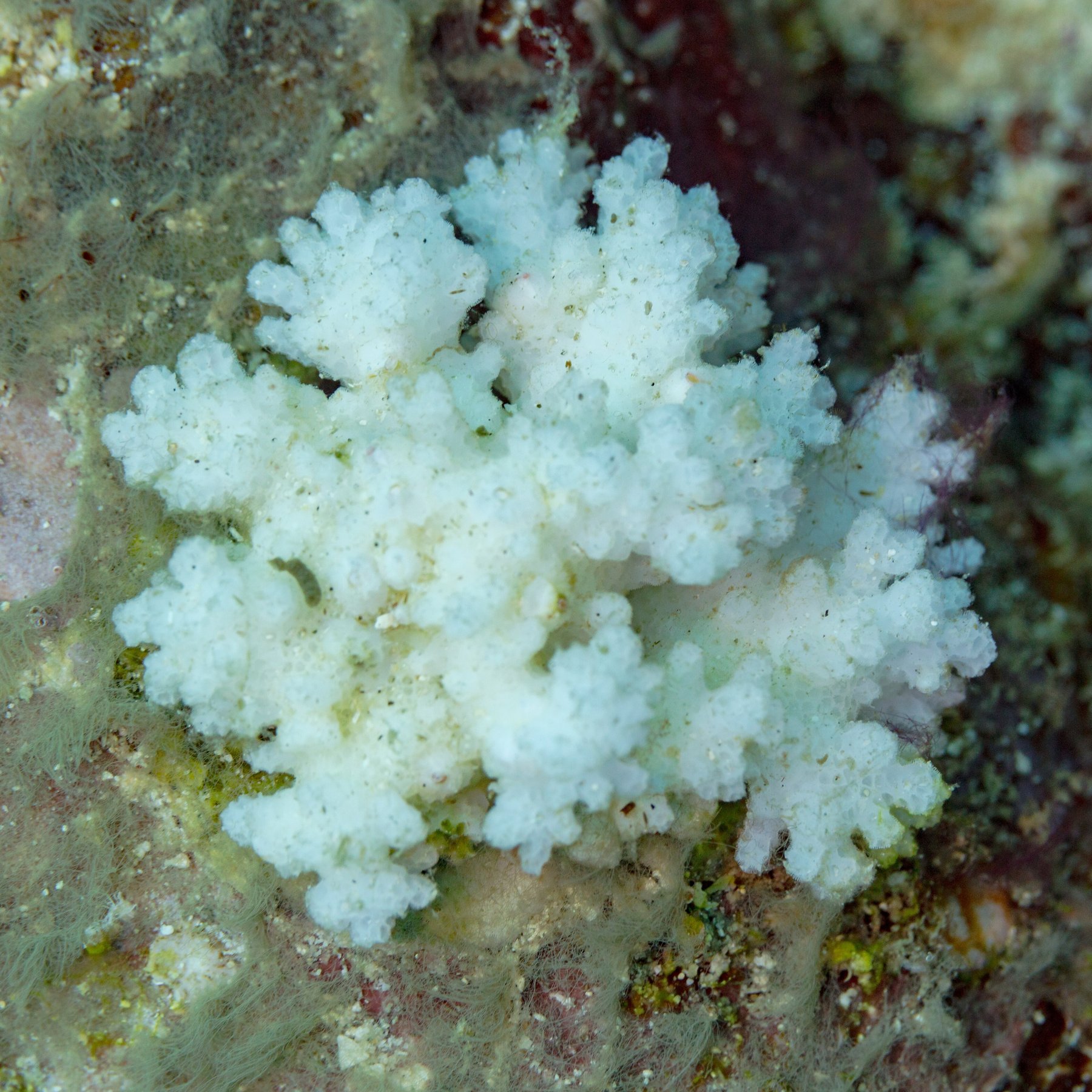
Cauliflower coral (Pocillopora damicornis), the species used in the Stanford experiment as reported by Nature, photographed on a reef at Anilao, Philippines, on 25 August 2023. This is a wild colony, not one of the study's laboratory fragments. Photo: Diego Delso, via Wikimedia Commons (CC BY-SA 4.0). Source page: https://commons.wikimedia.org/wiki/File:Coral_coliflor_(Pocillopora_damicornis),_Anilao,_Filipinas,_2023-08-25,_DD_123.jpg
When ocean waters warm, corals expel the colorful algae that live in their tissues and supply the energy they need to grow. The stress response, known as bleaching, leaves corals pale, starving and vulnerable, and is often lethal. Corals that survive can take months to years to recover, according to Stanford.
The work began with an accident. In 2025, Palumbi, the Jane and Marshall Steel, Jr. Professor in Marine Sciences, noticed that two fragments sampled from the same colony, one bleached and one healthy, had tipped over in a laboratory tank and come to rest against each other. Where they touched, color was returning to the bleached branch. "I'd never seen that before," he told Nature.
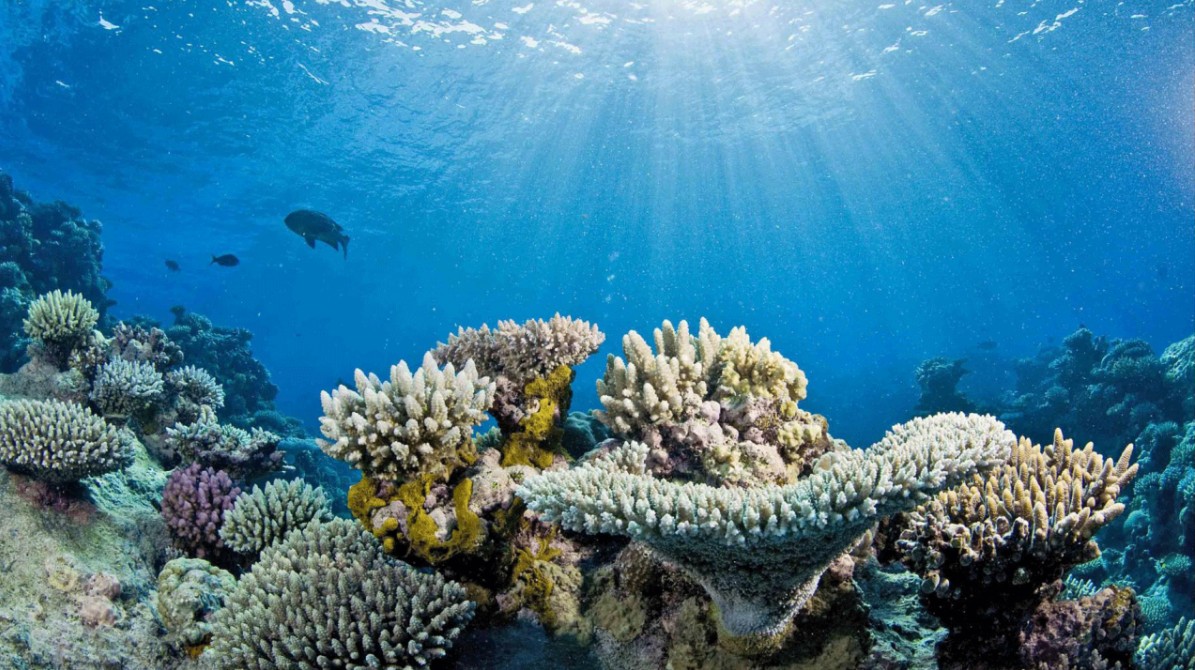
A coral reef with healthy corals alongside corals showing signs of bleaching, the loss of symbiotic algae that turns coral tissue pale. Illustrative image; not from the Stanford study. Photo: National Oceanic and Atmospheric Administration (photographer unidentified), via Wikimedia Commons (public domain, U.S. government work). Source page: https://commons.wikimedia.org/wiki/File:Coral_reef_with_healthy_corals_and_corals_with_signs_of_bleaching.png
Collins, who had been studying how disease spreads between corals through physical contact, set up a simple test. He assembled 10 pairs of fragments taken from the same animal, each pair with one bleached and one healthy piece. Five pairs were arranged to touch; in the other five, the fragments were separated by a few millimeters. The bleached fragments in the touching pairs fully recovered within seven weeks, Stanford said, while those without contact died. Nature, describing the same experiment, reported recovery within eight weeks and said the separated bleached fragments died after 20 weeks.
"While bleached corals may be dying, they are not dead yet," Collins said in the Stanford release. "The question we wanted to answer is, once a coral has bleached, what can we do?"
Using high-powered microscopy, the team found that once fragments touched, microscopic channels in their tissues aligned, creating a pathway along which algae and the nutrients they produce flowed from the healthy piece to the bleached one. Algae had moved into the bleached fragments within three days of contact.
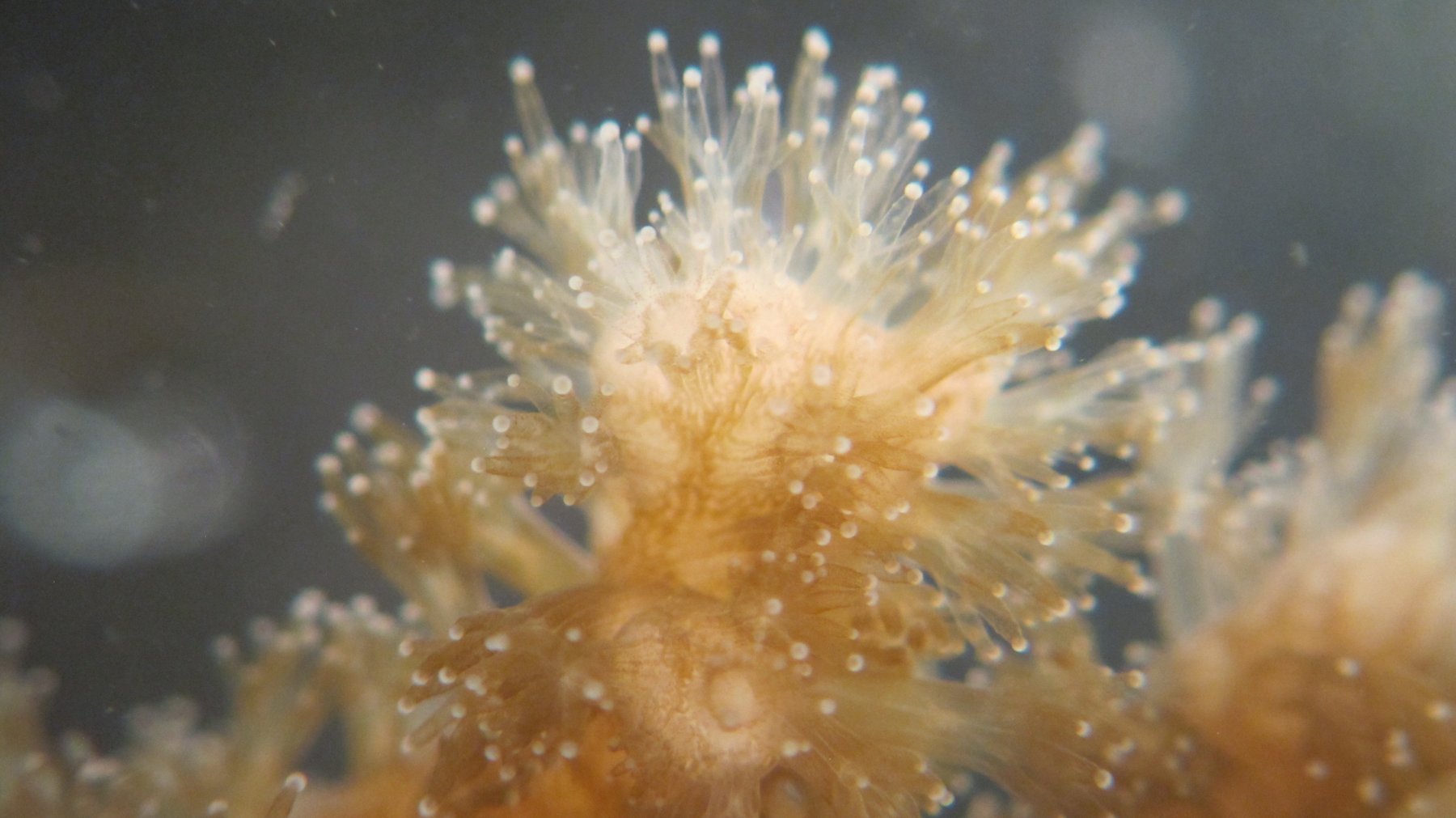
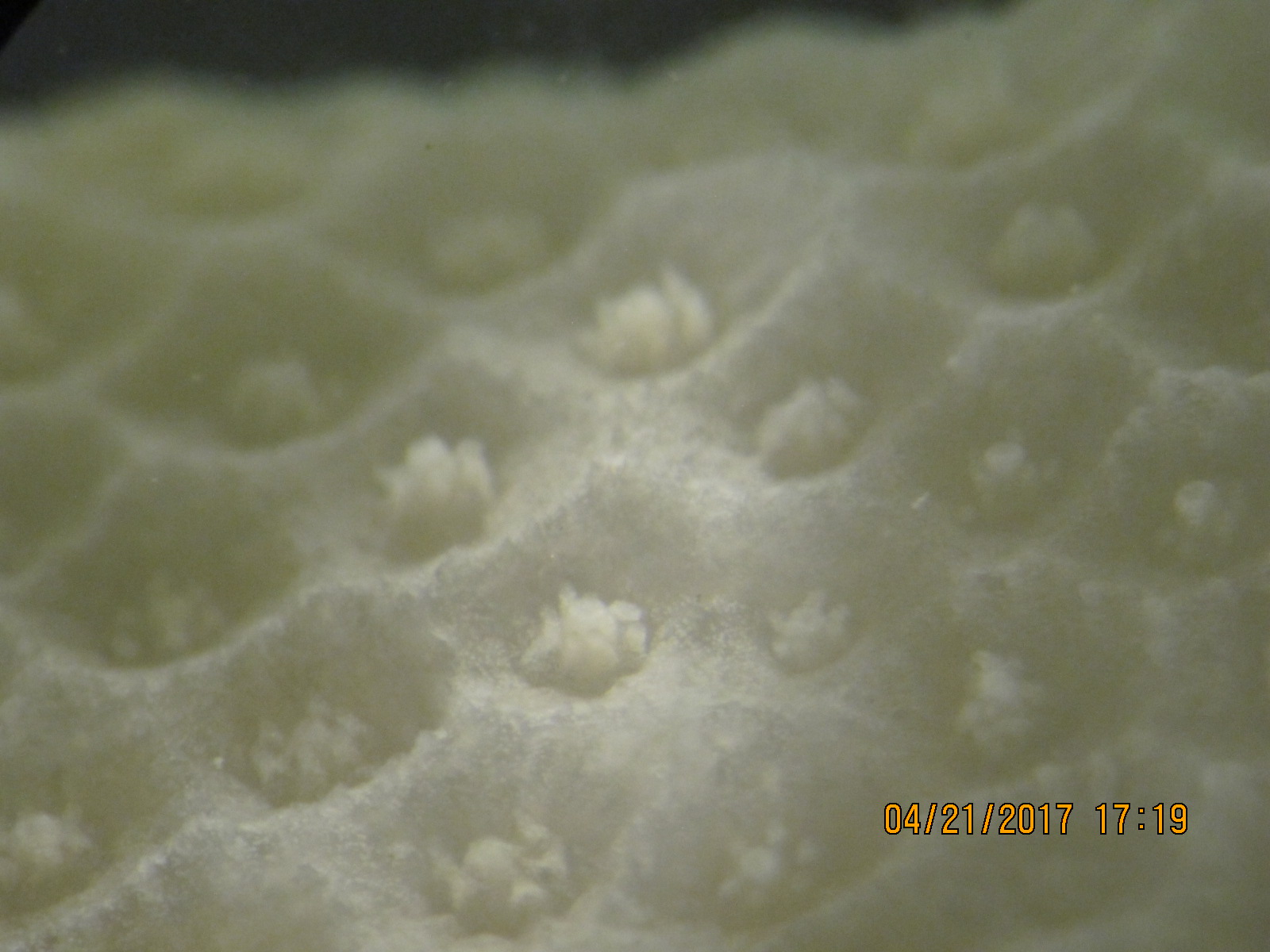
Pocillopora damicornis polyps under a microscope, Kewalo, Hawaii. The brown color in healthy coral tissue comes largely from symbiotic algae. Illustrative image; not from the Stanford study. Photo: Narrissa Spies, via Wikimedia Commons (CC BY-SA 4.0). Source page: https://commons.wikimedia.org/wiki/File:Pocillopora_damicornis_polyps.jpg
Contact did not need to last. The researchers separated pairs at different intervals and found that a single week of contact, and in some cases as few as three days according to the paper, delivered enough algae for the bleached fragment to complete its recovery alone. Recovery then proceeded at the same pace as in pairs left touching, which led the team to conclude that algae multiplying inside the bleached fragment, rather than a continuing flow from its partner, drove the rest of the process. By the second week, the algal population in bleached fragments was doubling about every four days, which the paper describes as up to an order of magnitude faster than most recovery times recorded for corals in the field.
"Once beneficial algae enter bleached corals, they don't just spread out," Palumbi said. "They flood in and start dividing at the fastest rates seen in corals."
The effect has a firm limit. Tissue fusion, the paper reports, occurred only between fragments of the same genet, the term for corals that share an identical genetic makeup. Pairings of different individuals triggered antagonistic interactions instead, and did not nurse the bleached piece back to health. "Genetically identical corals recognize one another when they come into contact," Palumbi said. "Their tissues fuse if they are from the same clone." He compared it to organ transplants between identical twins.
A bleached Porites lobata coral with its polyps closed, photographed at Kewalo Marine Laboratory, Oahu, Hawaii. Porites is a different genus from the coral used in the Stanford study; the image illustrates bleaching only. Photo: Narrissa P. Spies, via Wikimedia Commons (CC BY-SA 4.0). Source page: https://commons.wikimedia.org/wiki/File:Bleached_coral_1.jpg
The study team itself cautions that the method, as tested, cannot simply be scaled up. It requires a genetically identical, healthy copy of every bleached coral, which Stanford noted is not feasible at the scale needed to restore reefs. In the coming months, the researchers plan to test ways of delivering beneficial algae without contact, possibly by collecting algae from healthy corals well before heat waves and delivering them in large batches to bleached ones.
"Bleached corals are often considered a lost cause because recovery after a heatwave is very slow, if it happens at all," said Micheli, the David and Lucile Packard Professor in Marine Science and a faculty adviser to Collins. "We hope this new research will inspire solutions that keep corals healthy long enough to enable full recovery after heat waves through slower processes such as growth, reproduction, and recruitment of new colonies."
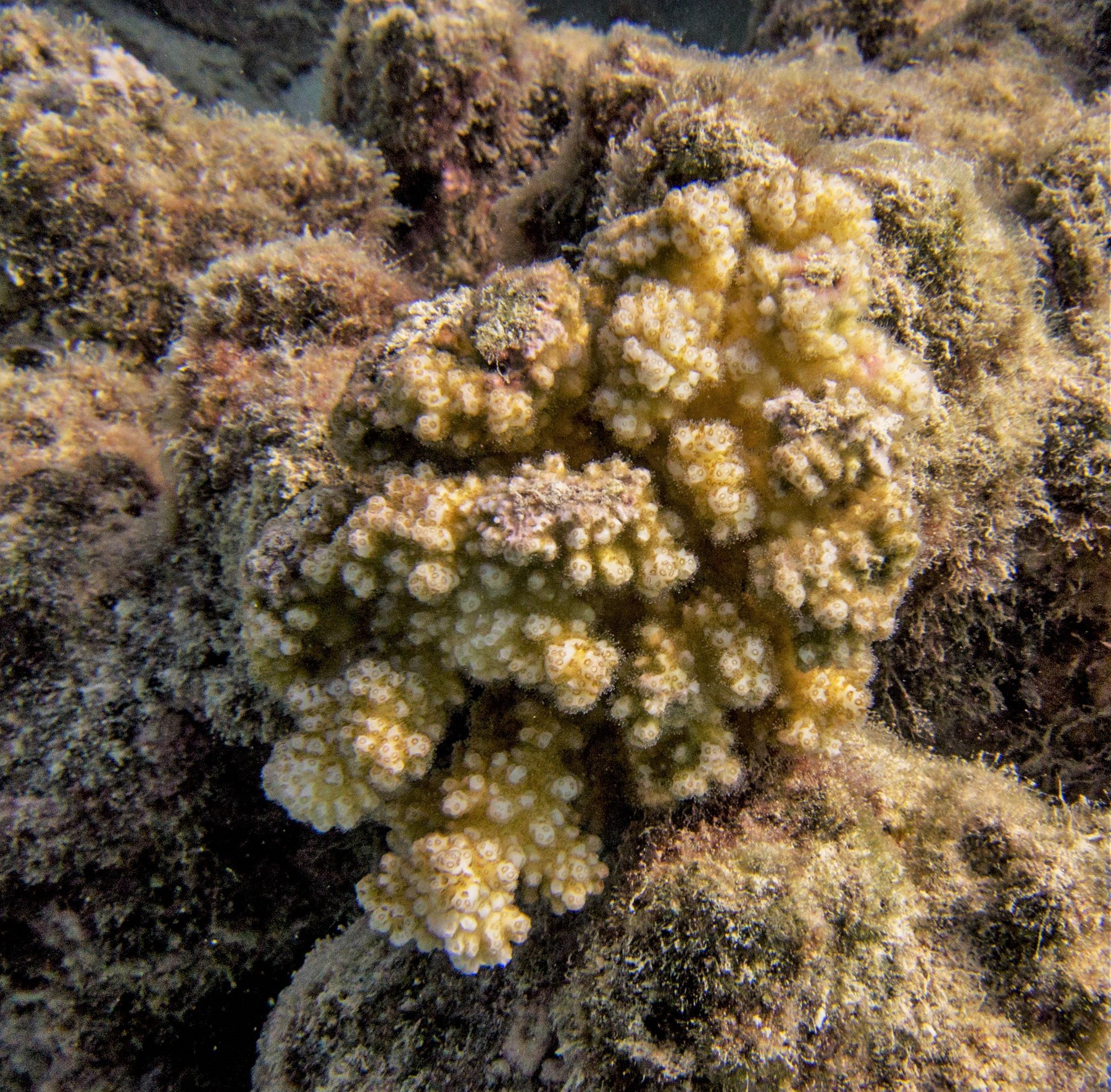
A Pocillopora damicornis colony off Moorea, French Polynesia. Wild colony; not from the Stanford study. Photo: Ryan McMinds, via Wikimedia Commons (CC BY 2.0). Source page: https://commons.wikimedia.org/wiki/File:Pocillopora_damicornis,_Moorea.jpg
Coral reefs provide habitat for roughly one third of all known marine species and help protect coastlines from storms and flooding, according to Stanford. The new work, the authors write, reveals "a previously unrecognized natural process for efficiently reintroducing symbionts to bleached corals," and provides a foundation for research into potential recovery interventions.
"These new insights into how corals can naturally recover give us hope for the future," Micheli said. "They open the door to what's possible and may lead to the breakthrough we need to accelerate reef restoration."
The research was funded by the National Science Foundation and Stanford University, including seed funds from the Big Ideas for Oceans grant program.
Sources: Stanford Doerr School of Sustainability, "Stanford scientists discover a way to reverse coral bleaching at record speed," 14 October 2026 (https://sustainability.stanford.edu/news/stanford-scientists-discover-way-reverse-coral-bleaching-record-speed/); Collins, D. S. et al., "Rapid coral bleaching recovery via symbiont transfer from healthy corals," Science Advances 12, eaeh1580 (2026), https://doi.org/10.1126/sciadv.aeh1580; Nature news, "Bleached corals thrive within days when touching healthy neighbour," 14 October 2026 (https://www.nature.com/articles/d41586-026-03266-x).
- science
- oceans
- coral-reefs
- marine-biology
- climate
- stanford