White-Tailed Eagle Chicks Fledge in England for a Fourth Straight Year
Forestry England and the Roy Dennis Wildlife Foundation report three wild-born white-tailed eagle chicks fledged in Dorset and Sussex, the fourth consecutive year of breeding success since the 2019 reintroduction.
Just News Desk, Correspondent||3 min read
DORSET, England - Three white-tailed eagle chicks have fledged from wild nests in southern England for the fourth consecutive year, Forestry England and the Roy Dennis Wildlife Foundation reported, with one young bird leaving a Dorset nest and two more fledging in Sussex.
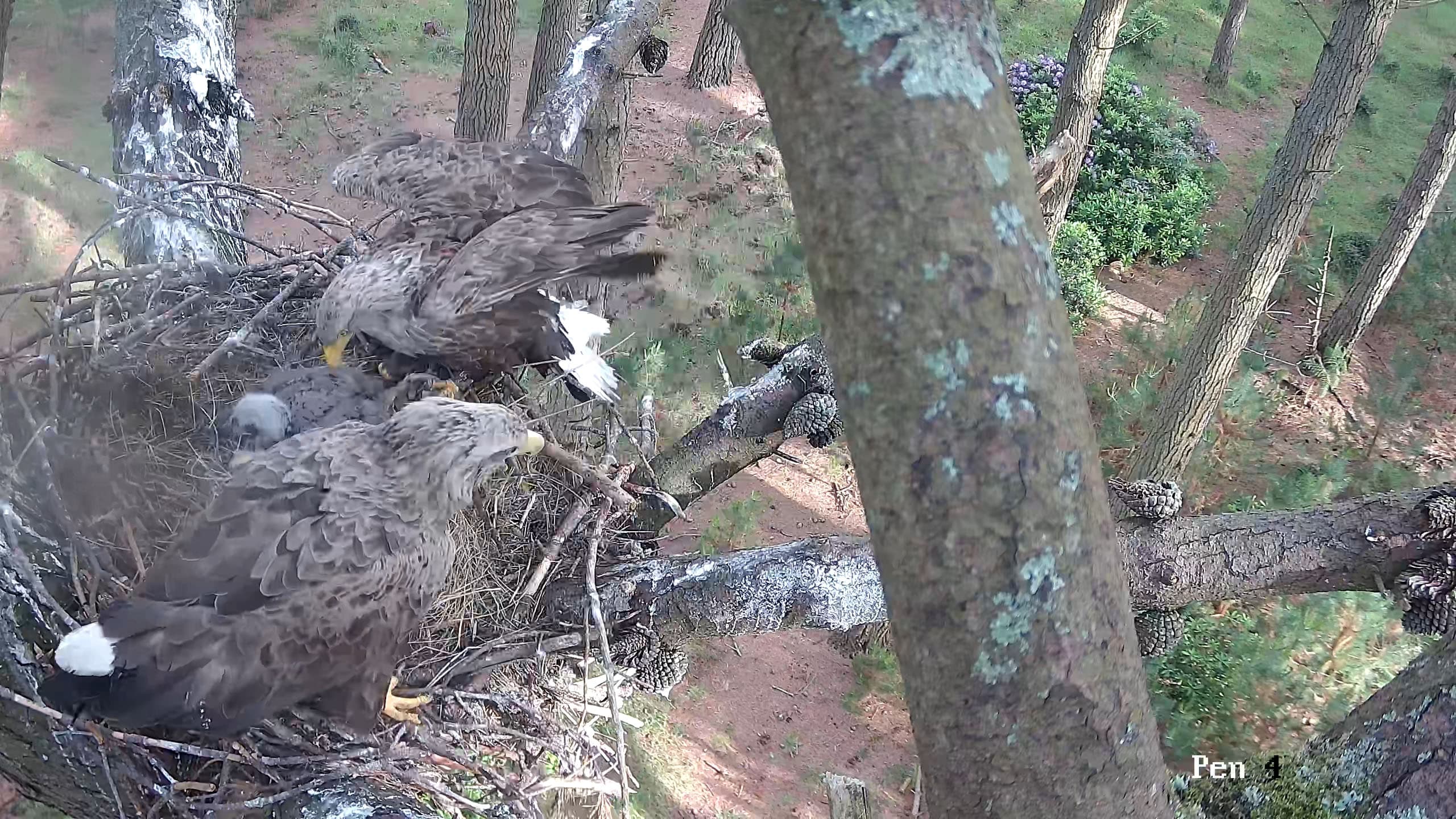
Five pairs of eagles released through the partners' reintroduction project have now formed bonds and established territories. Two of those pairs bred successfully this summer. The Sussex chicks, ringed GE36 and GE37, are both males and the offspring of birds G405 and G471, released in 2020; that pair has bred every year since 2023. A single male chick, GE38, fledged from the Dorset nest of G463 and G466, their second successful breeding attempt. Forestry England called the Dorset outcome especially notable because the adult male has hunted and nested with only one leg after losing the other five years ago.
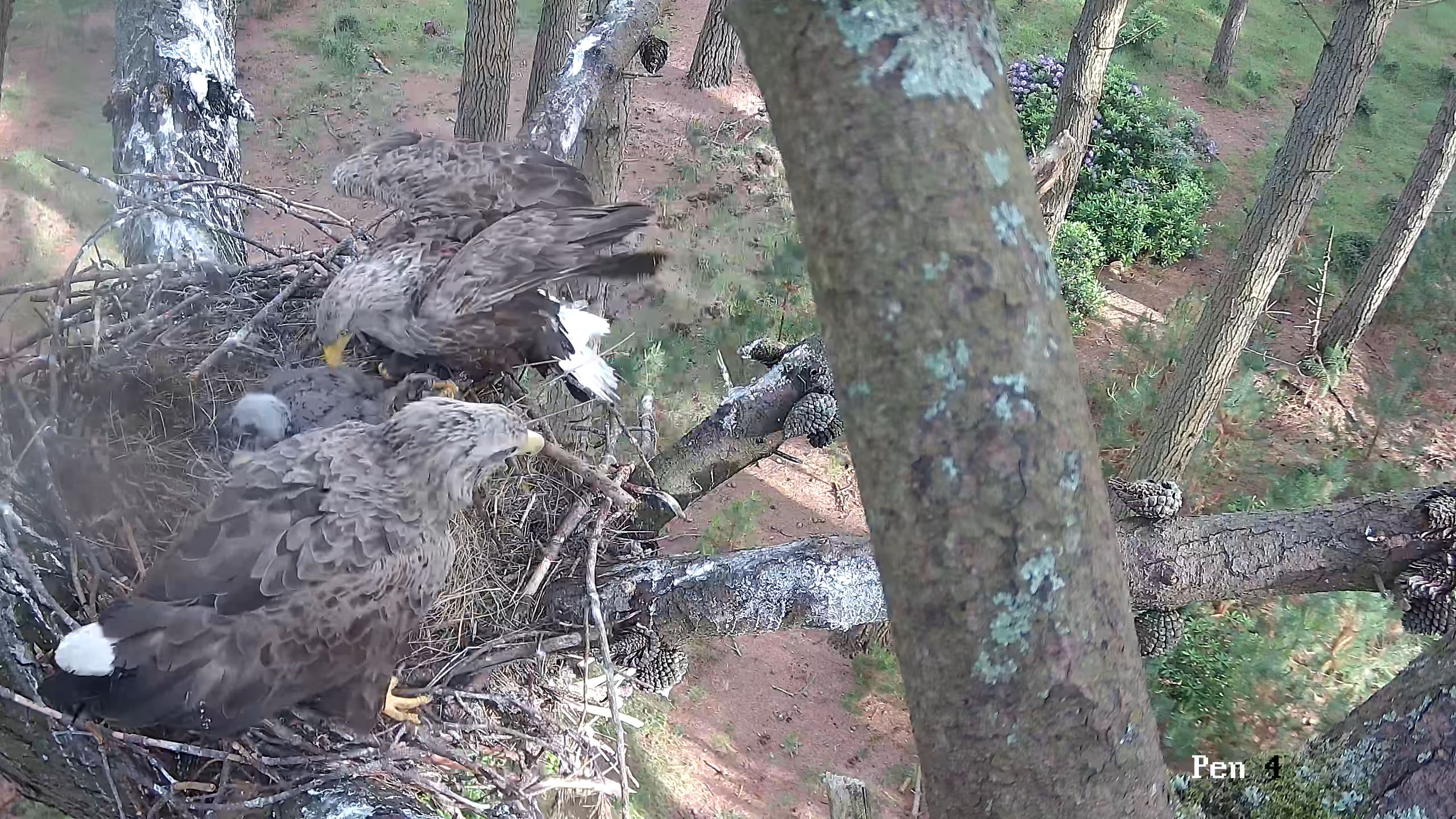
A white-tailed eagle chick at a Dorset nest monitored by the reintroduction project. Photo: Forestry England. Source page: https://www.forestryengland.uk/news/three-wild-white-tailed-eagle-chicks-hatched-england
The three fledglings bring the number of white-tailed eagles born in the wild through the project to nine. All were fitted with satellite tags so the team can follow their dispersal, as it has tracked earlier young birds across the United Kingdom. Nest cameras this season also logged more than 300 records of food brought to the nests; fish was by far the most frequent item, project officer Steve Egerton-Read of Forestry England said.
"This year's breeding success is another important milestone in the return of this lost species to England; it shows what can be achieved by very skilled wildlife managers," Roy Dennis OBE of the Roy Dennis Wildlife Foundation said. "Restoring a species takes many years and requires the support of a wide range of communities and organisations, in particular landowners and farmers."
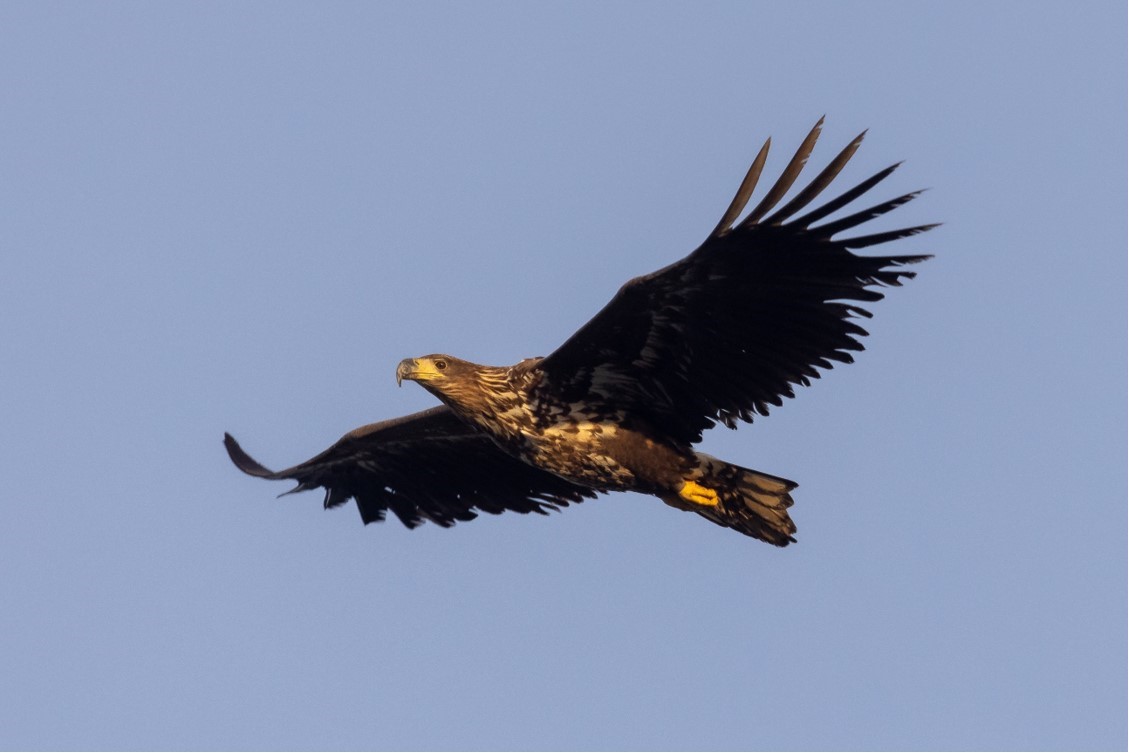
A white-tailed eagle soaring in flight. White-tailed eagles are Britain's largest birds of prey, with wingspans of up to 2.5 metres. Photo: Jamie Randall / Forestry England. Source page: https://www.forestryengland.uk/nature-wildlife/white-tailed-eagles
Human persecution drove the species from southern England; the last pair known to breed there did so in 1780. Forestry England and the foundation began releases in 2019 under a Natural England licence, bringing young birds from wild Scottish nests under NatureScot authorisation. To date, 56 young white-tailed eagles have been released, including five this summer from the project's Isle of Wight base and, for the first time, six at Exmoor National Park in partnership with Exmoor National Park Authority.
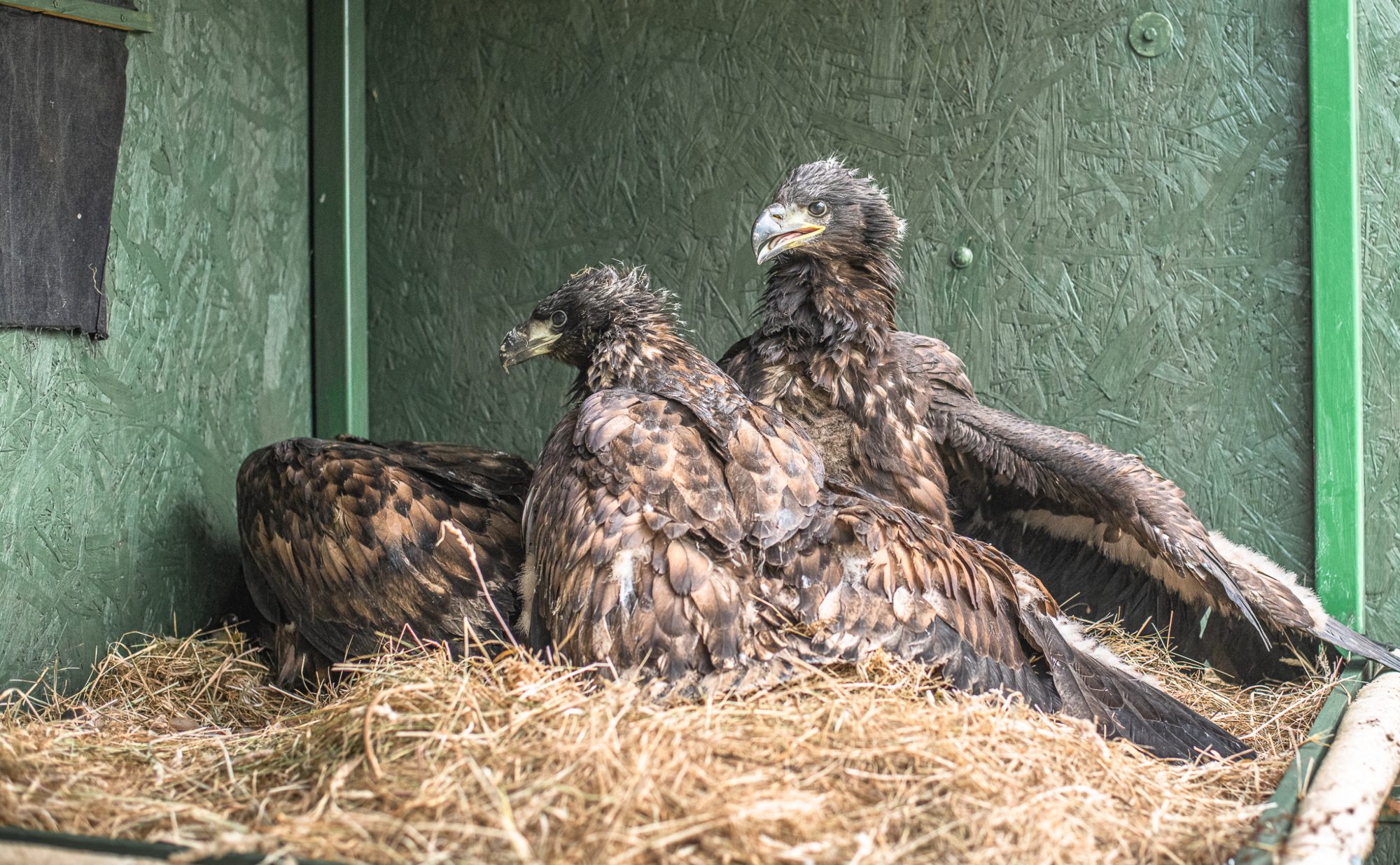
Two juvenile white-tailed eagles in a special rearing pen before release. Photo: Ainsley Bennett / Forestry England. Source page: https://www.forestryengland.uk/nature-wildlife/white-tailed-eagles
"We are delighted that these three chicks made it through and will be closely watching their progress as they begin to explore the landscape," Egerton-Read said. Three further established pairs have not yet fledged young, and Dennis said the partners expect breeding progress to continue in coming years as those birds mature.
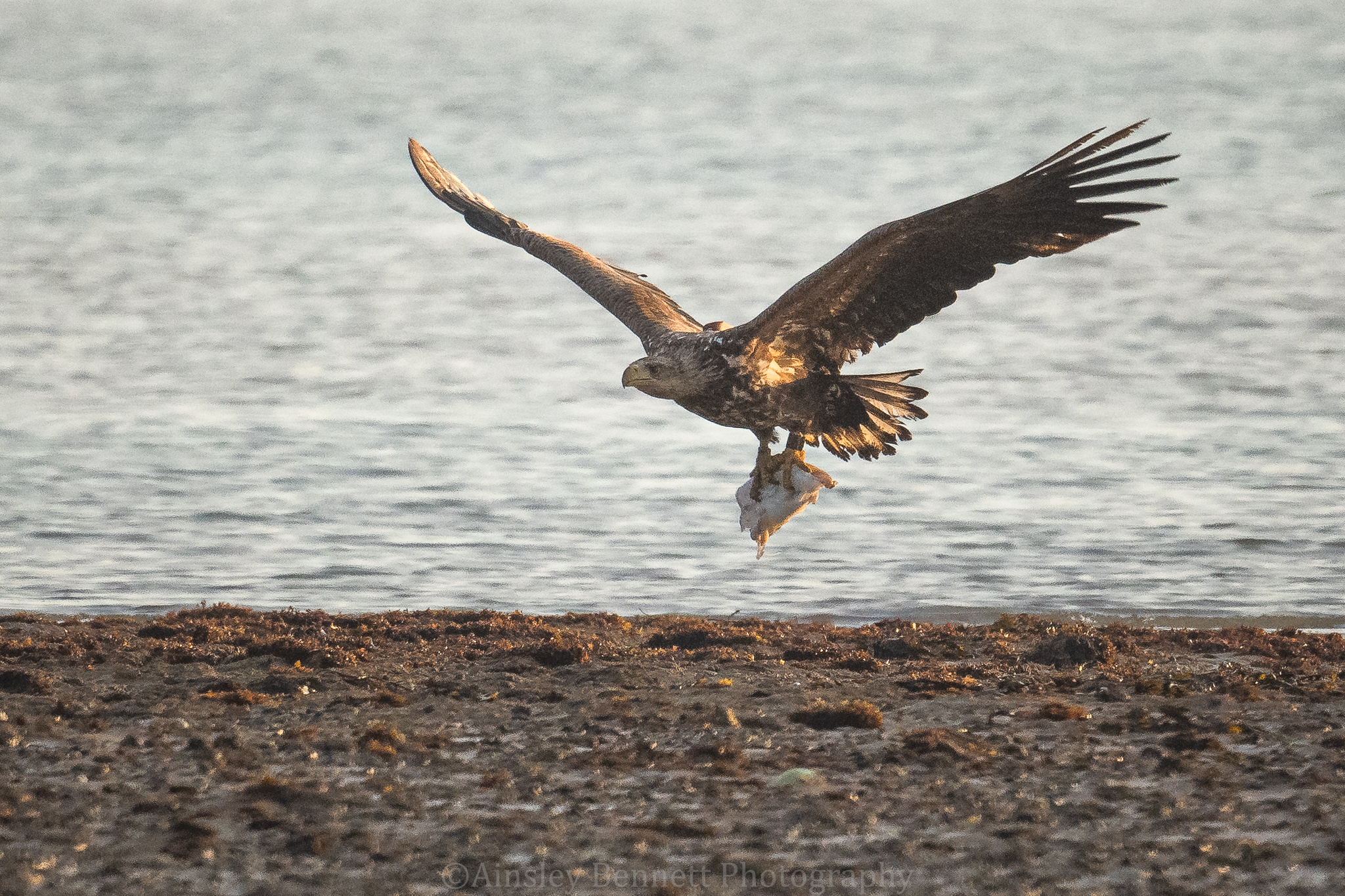
A white-tailed eagle carries cuttlefish in its talons while flying over the shoreline, illustrating the coastal diet the birds favour. Photo: Ainsley Bennett / Forestry England. Source page: https://www.forestryengland.uk/nature-wildlife/white-tailed-eagle-reintroduction-project
- environment
- conservation
- eagles
- uk
- biodiversity
- wildlife