
After 18 Years, White-Lipped Peccaries Return to Costa Rica's Piedras Blancas National Park
Thirteen white-lipped peccaries, captured on the Osa Peninsula and carried by truck, boat and finally by hand, have been returned to Piedras Blancas National Park in southern Costa Rica, where the species had gone unrecorded for 18 years, according to Osa Conservation and the Osa Conservation Area.
Just News Desk, Correspondent||6 min read
GOLFITO, Costa Rica - Thirteen white-lipped peccaries have been returned to Piedras Blancas National Park in southern Costa Rica, bringing back a herd-living forest species that had gone unrecorded in the park for 18 years, according to Osa Conservation, the Costa Rican nonprofit that led the reintroduction with the government's Osa Conservation Area.
The white-lipped peccary (Tayassu pecari), known locally as chancho de monte or cariblanco, was wiped out of Piedras Blancas by hunters roughly 18 years ago, Mongabay reported. Its absence, Osa Conservation wrote in a 10 July announcement, left "a critical gap" in the park's food chain and an ecological imbalance in the tropical forest. Many young people in the surrounding communities, it noted, had not been born the last time a herd was seen there.
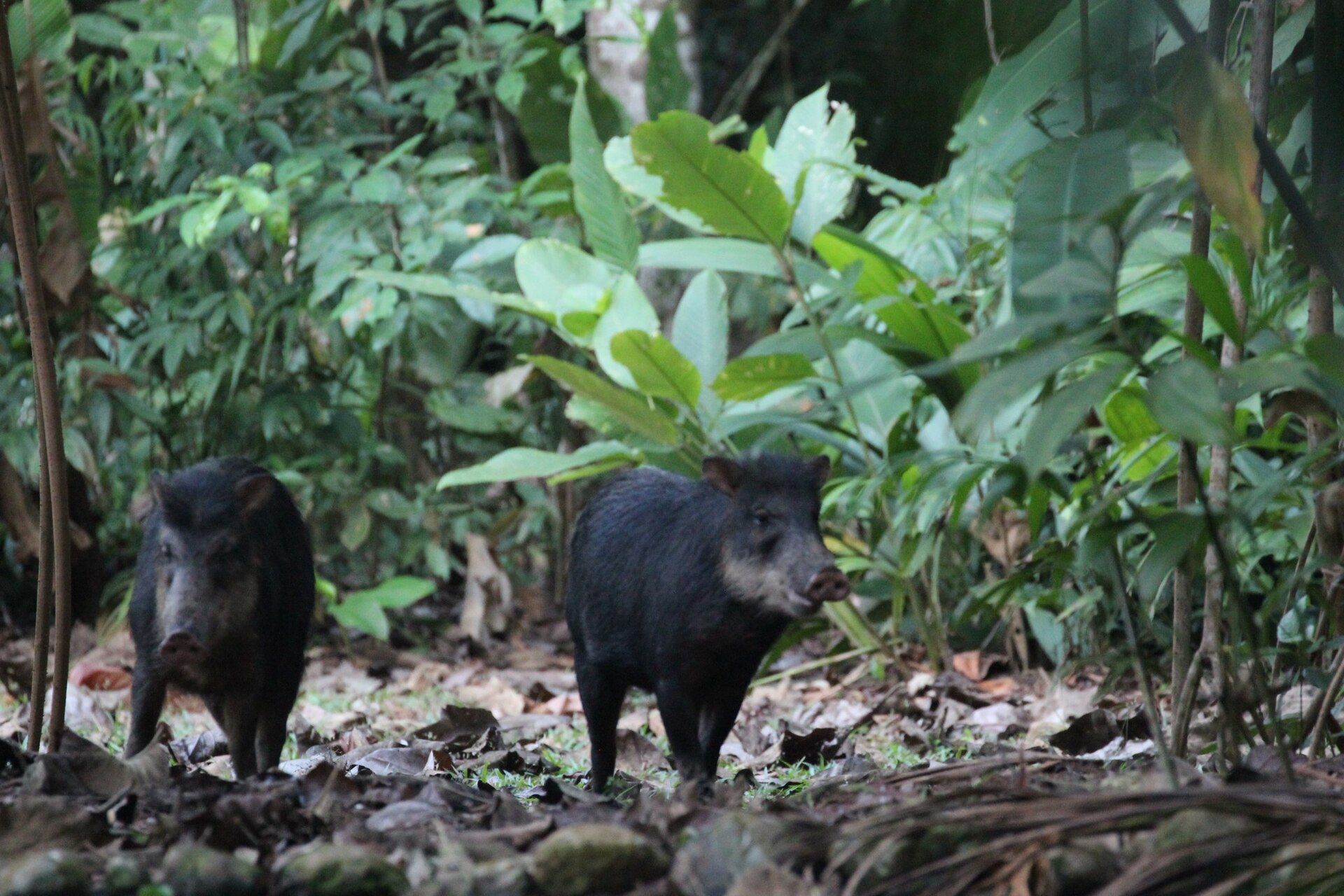
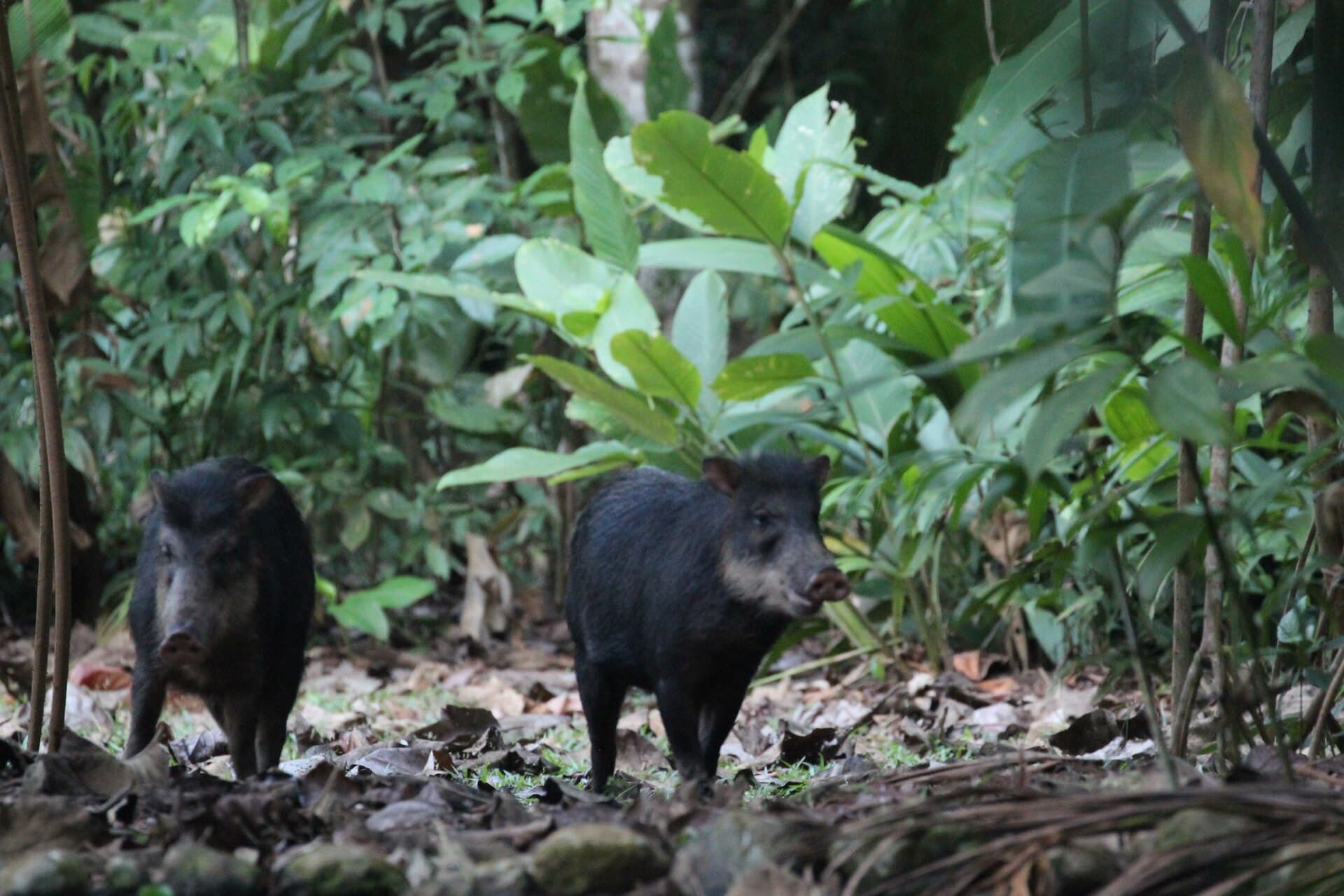
White-lipped peccaries (Tayassu pecari) on the forest floor in Costa Rica, 14 February 2020. Shown for species context; these are not the animals released at Piedras Blancas. Photo: Rob Foster, via iNaturalist and Wikimedia Commons (CC BY 4.0). Source page: https://commons.wikimedia.org/wiki/File:Tayassu_pecari_63585468.jpg
The work began in 2023, when Osa Conservation and the Osa Conservation Area, known by its Spanish acronym ACOSA and part of the national system of conservation areas, SINAC, started assessing the species' status on the Osa Peninsula and the record of earlier conservation efforts. The project took shape a year later. Its planners held a workshop with ACOSA officials to map where the peccary had lived and where it still survived, and surveyed 335 people in 13 communities around the park. That community knowledge, the organization said, confirmed that the animal had disappeared and gave the project its final green light.
Mongabay, which reported on the translocation in August, said 72 percent of the residents surveyed supported bringing the species home, and more than half saw it as a potential draw for tourism.
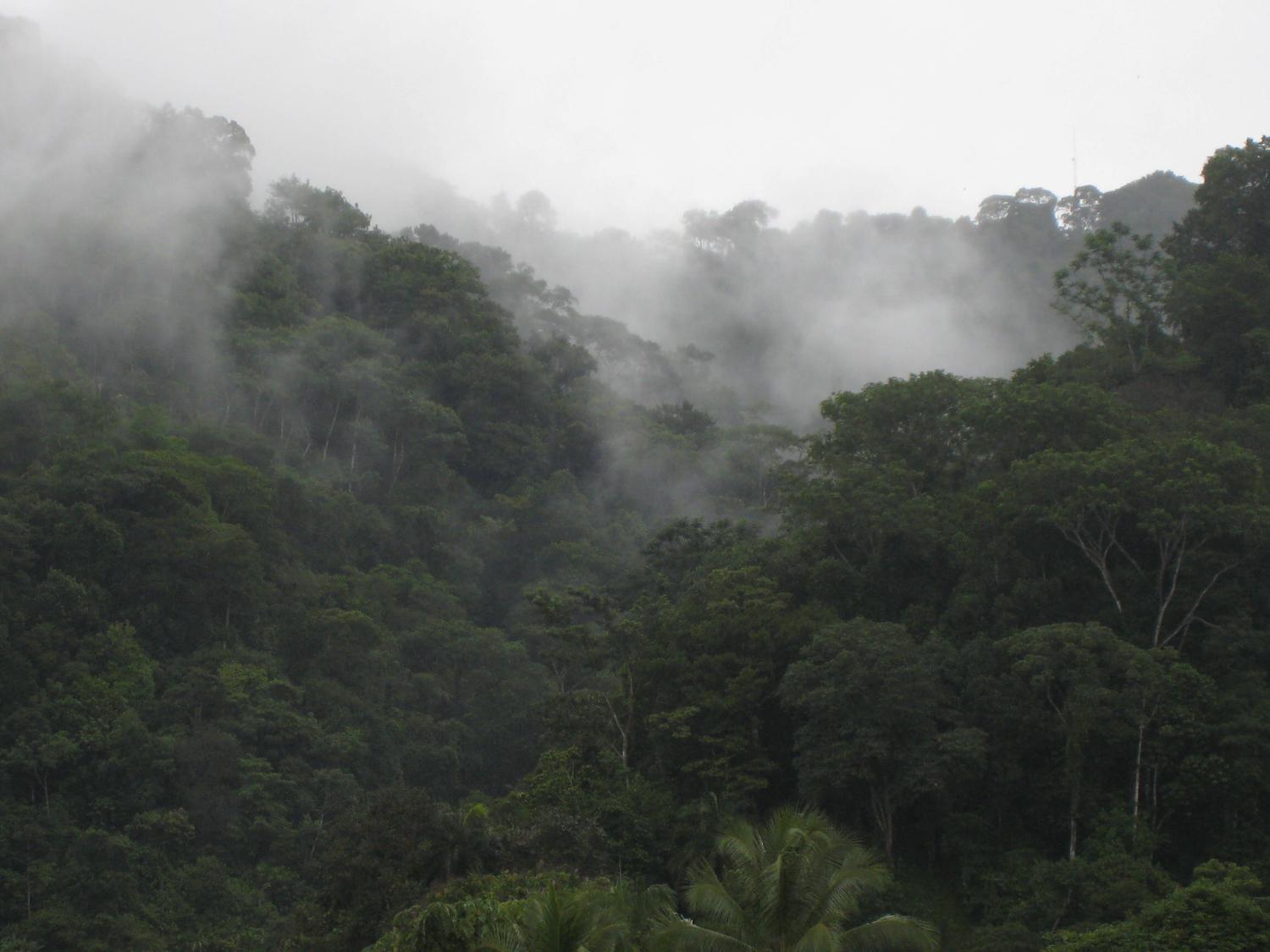
Mist rising over the rainforest near Golfito, on Costa Rica's southern Pacific coast, the region that includes Piedras Blancas National Park. Landscape context; not the release site. Photo: Central Intelligence Agency, The World Factbook, via Wikimedia Commons (public domain). Source page: https://commons.wikimedia.org/wiki/File:Rainforest_near_Golfito,_Costa_Rica.jpg
The animals came from the Osa Peninsula, across the Golfo Dulce, where the species still ranges in strong numbers. According to Mongabay's account, the team spent about a year and a half luring a herd near Osa Conservation's property at Piro, at the peninsula's southern tip, into a corral baited with corn and coconuts. When the gate dropped, 13 animals were inside: three males and 10 females, all healthy, according to Guido Saborío, the organization's rewilding manager.
Capture and transport were carried out under strict veterinary supervision, Osa Conservation said. Mongabay described a relay of roughly 16 hours involving more than 20 people. Pickup trucks escorted by ACOSA park rangers carried the crated animals overland to Puerto Jiménez; a boat provided by a local ecotourism lodge ferried them across the gulf at night; and the crates were carried the last 2 kilometers into the park by hand, to a temporary corral used for a soft release.

Evening view from Golfito over the Golfo Dulce, Pacific coast of Costa Rica, 9 February 2016. The reintroduced herd was ferried across this gulf from the Osa Peninsula. Photo: David Broad, via Panoramio and Wikimedia Commons (CC BY 3.0). Source page: https://commons.wikimedia.org/wiki/File:Golfito_-_Pacific_Coast_of_Costa_Rico_-_panoramio.jpg
From that corral, the animals were allowed to explore the surrounding forest gradually as they adjusted to their new home, the organization said. Two were fitted with satellite collars, and camera traps were placed in the park. Based on that collar and camera-trap data, gathered by the rewilding team and Piedras Blancas rangers, the herd appeared healthy and was staying together, Mongabay reported. Project specialists told the Costa Rican outlet Delfino.cr in July that more time would be needed to determine whether the herd becomes established.
The stakes extend well beyond one species. White-lipped peccaries are prey for jaguars and pumas, disperse the seeds of 57 kinds of plants, and dig wallows that other animals use, according to Osa Conservation. Mongabay noted that a survey of the park a few years ago found that the jaguar, too, had disappeared from Piedras Blancas. Both species are listed as endangered in Costa Rica; globally, the International Union for Conservation of Nature classifies the white-lipped peccary as vulnerable.
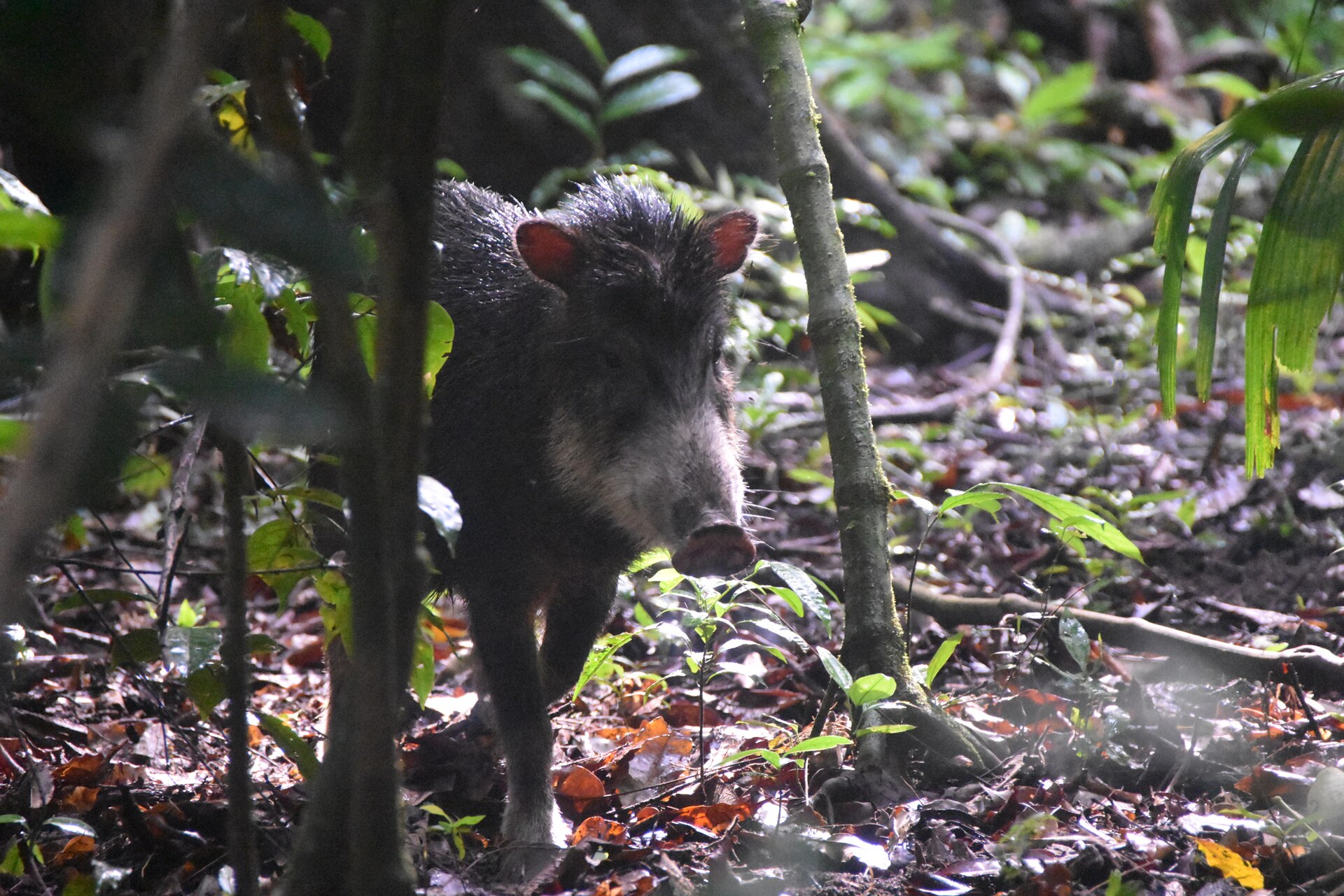
A white-lipped peccary (Tayassu pecari) in Costa Rica, 20 May 2018. Species context; not one of the released animals. Photo: Loren Cassin Sackett, via iNaturalist and Wikimedia Commons (CC BY 4.0). Source page: https://commons.wikimedia.org/wiki/File:Tayassu_pecari_168421539.jpg
Communities have been built into the project from the start. Osa Conservation organized a monitoring group in La Gamba, a community near the park, where residents of all ages learn about local mammals and train to use camera traps, and it has worked with the Comisión Turística Sur-Sur on tourism training around Piedras Blancas. "We are proud to know that, by protecting the natural wealth of southern Costa Rica, we also offer opportunities for local communities through ecotourism and environmental education," Mr. Saborío said in the announcement, in remarks translated from Spanish by Just Positive.
The herd's long-term safety is not assured. Piedras Blancas is linked by forest to Corcovado National Park on the Osa Peninsula, but poaching persists outside the national parks, the same pressure that emptied Piedras Blancas in the first place, Mongabay reported. Osa Conservation plans further translocations toward a target of 25 to 30 white-lipped peccaries in the park.
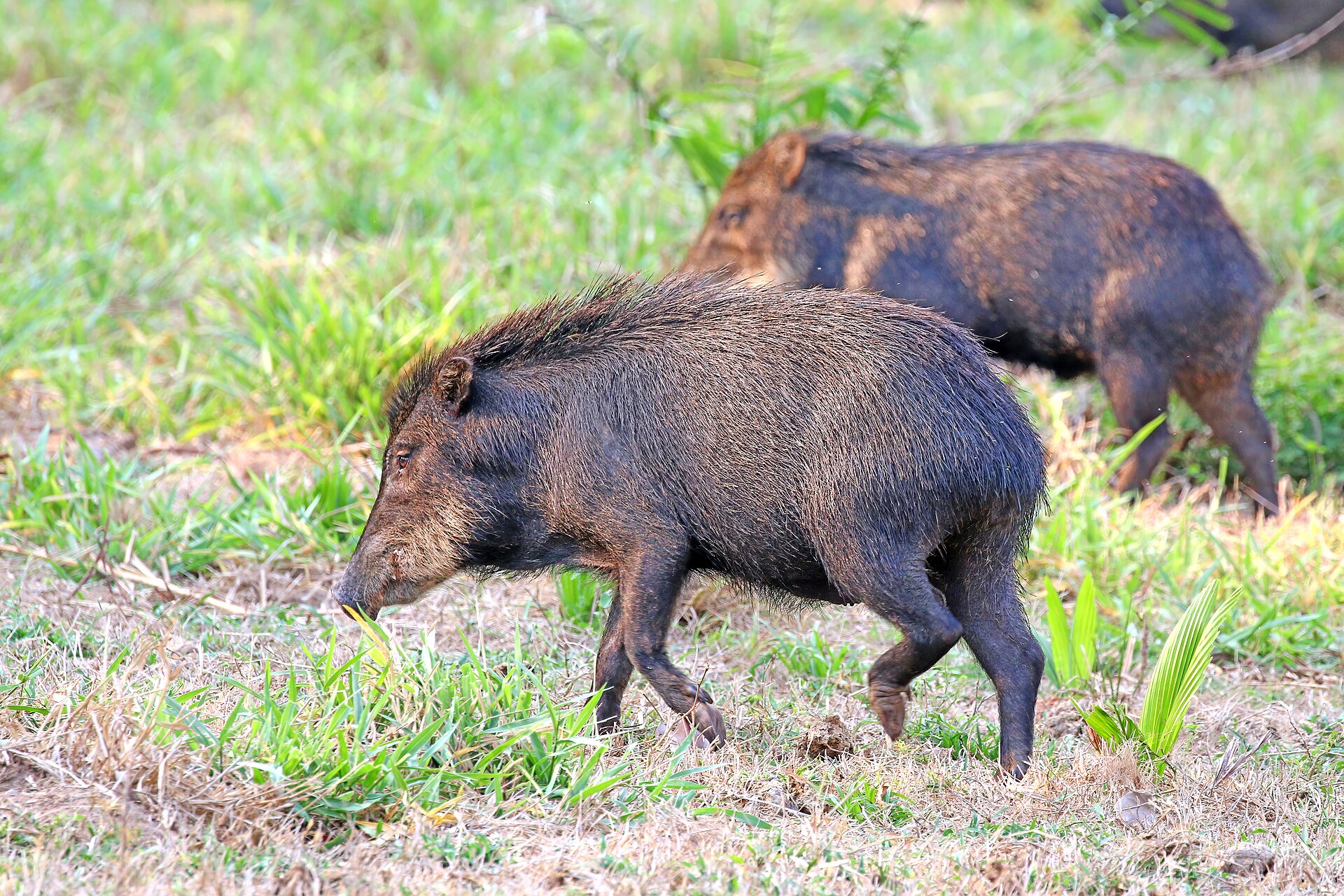
White-lipped peccaries (Tayassu pecari) at Rio Negro, Mato Grosso do Sul, Brazil, 7 September 2015. Species context from elsewhere in the species' range; not Costa Rican animals. Photo: Charles J. Sharp, Sharp Photography, via Wikimedia Commons (CC BY-SA 4.0). Source page: https://commons.wikimedia.org/wiki/File:White-lipped_peccary_(Tayassu_pecari)_Rio_Negro.jpg
Carlos Manuel Rodríguez, Osa Conservation's executive director and a former Costa Rican environment minister, put the logic of the effort plainly. The peccaries might one day have found their own way back, he told Mongabay, "but that day could take 100 years. So we are accelerating, using the science."
The primary record is Osa Conservation's announcement of 10 July 2026, "Un regreso histórico: el chancho de monte vuelve al PN Piedras Blancas" (https://osaconservation.org/2026/07/10/un-regreso-historico-el-chancho-de-monte-vuelve-al-pn-piedras-blancas/). Details of the capture, transport and monitoring are from Mongabay's report of 27 August 2026 by Liz Kimbrough (https://news.mongabay.com/2026/08/13-peccaries-sail-home-to-heal-a-costa-rican-forest/). Photographs of the release are not reproduced here; the images above are Wikimedia Commons files chosen for species and landscape context.
- environment
- conservation
- costa-rica
- central-america
- wildlife
- reintroduction
- rewilding



_Rio_Negro.jpg)