Phoenix just voted unanimously to turn 200 heat-island lots into shade parks
A rare all-hands city council vote funds trees, misting stations, and night-time cooling centers on former parking lots. The first sites are already taking root in the neighborhoods that bake first.
Naomi Brooks, Politics desk||3 min read
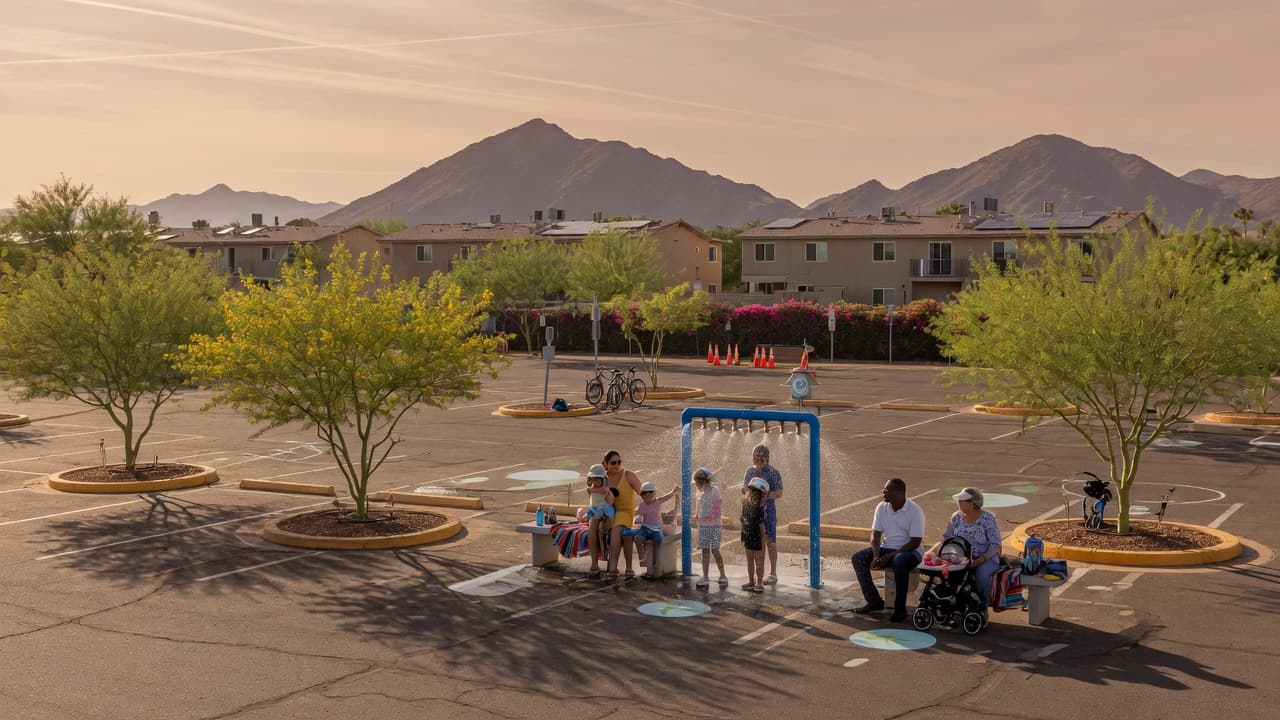
Phoenix City Council does not do unanimous very often, and it almost never does it about parking. On 3 September it did both. Ordinance 2026-441 commits the city to converting 200 publicly owned surface lots and leftover asphalt pads into “shade parks” over seven years: trees, shade structures, water, seating, and, at 40 of the sites, overnight cooling centers during extreme-heat emergencies.
The vote was 9–0. The mayor called it “the least poetic, most necessary park system we will ever plant.” Neighborhood groups that have spent a decade mapping heat deaths called it late, then showed up with shovels anyway.
A map that made the argument
The ordinance did not begin in a climate speech. It began in a spreadsheet. The city’s Office of Heat Response and the Maricopa County health department overlaid 2023–2025 heat-death locations with tree-canopy maps and vacant municipal lots. The overlap was ugly and specific: wide asphalt, few porches, bus stops without roofs, apartments without reliable air conditioning.
Councilmember Luz Delgado, who represents a district that regularly records some of the city’s highest night-time temperatures, introduced the bill with three photographs of the same lot — June at 3 p.m., June at 3 p.m. after a misting pole, and a rendering with palo verde and mesquite. “I am not asking for a sculpture garden,” she said. “I am asking for a place a grandmother can wait for a bus without gambling.”
Business groups that usually defend parking minimums stayed quiet, then endorsed. The Arizona Restaurant Association noted that evening outdoor seating dies when the pavement stores the day’s heat. A builders’ PAC called the ordinance “infrastructure,” which in Phoenix is the highest compliment.
What a shade park is
The design is standardized on purpose, so the city cannot stall in custom architecture. Each site gets a minimum canopy target within five years, permeable ground where soil allows, a bottle-filler, lighting that is actually maintained, and a maintenance contract with a local crew — not a volunteer hope.
Forty sites will include a locked, staffed cooling room that opens when the National Weather Service issues an extreme-heat warning. Those rooms are the politically delicate piece: they cost money at night. The ordinance funds them from a combination of the existing heat-response budget, a slice of downtown parking revenue, and a federal resilience grant already awarded.
The first five lots broke ground in August in Maryvale and South Phoenix. The trees are young. The shade is still more promise than cover. Landscape architect Samir Haddad, whose firm won the prototype contract, shrugged at that. “People want a forest on day one. Forests are a calendar. We planted the calendar.”
Unanimous is not the same as done
A 9–0 vote can hide the next fight, which will be water and upkeep. Desert trees are not zero-thirst. The plan uses recycled municipal water for the first three years and species chosen for the basin, not for a Midwestern postcard. If those choices slip toward ornamental lawns, the ordinance’s own advisory board can freeze new sites.
For now the civic fact is simple and rare: a Sun Belt council looked at death certificates, looked at asphalt it already owned, and chose shade. On a Saturday after the vote, a Maryvale lot that used to hold a dozen cars held two benches, a misting arch, and a line of saplings in cardboard watering boxes. A boy filled a bottle and poured it on the nearest tree without being asked. That is not policy. It is what policy looks like when it reaches the ground.
- community
- cities
- heat
- environment