A mosque, a church, and a synagogue opened a kitchen. It now feeds 2,000 people a week.
The Table of Abraham in Minneapolis is not a metaphor. It is a production line of soup, bread, and dignity, staffed by people who pray in different rooms and clock in to the same steam.
Lila Haddad, Faith and community reporter||3 min read
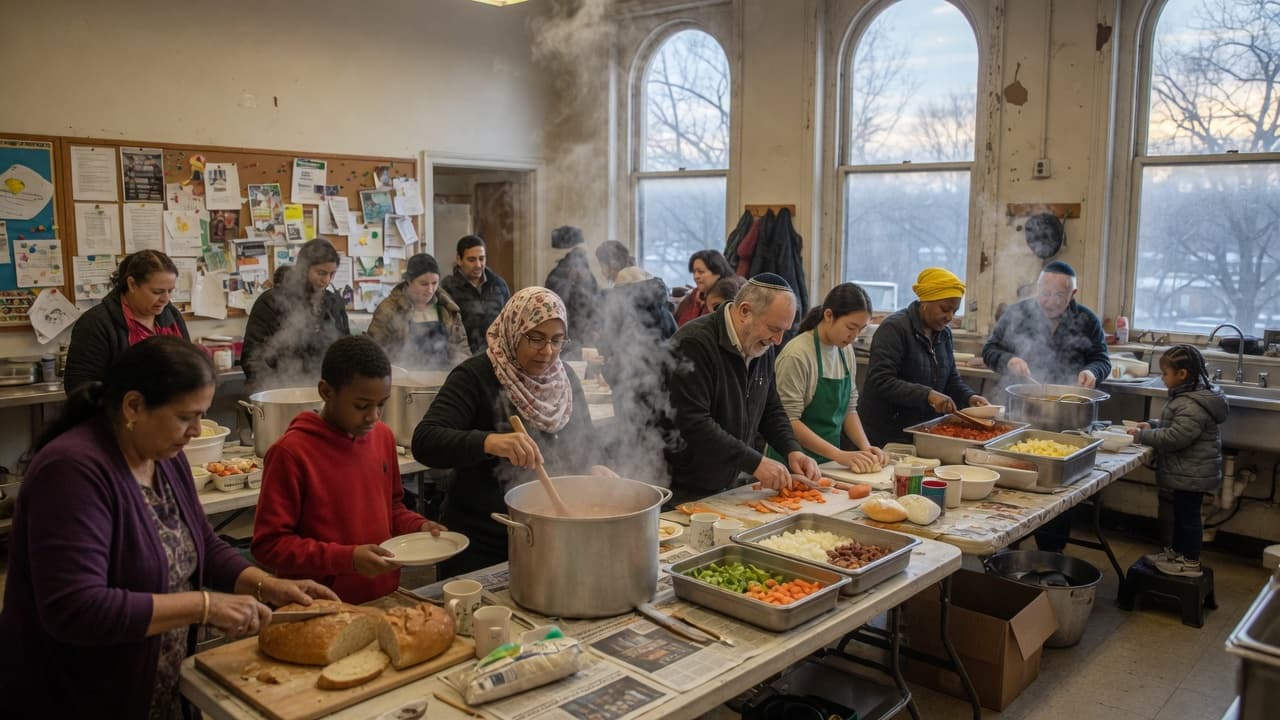
The building on Lake Street used to be a banquet hall that hosted weddings until the weddings moved to the suburbs. On a Monday in Minneapolis it hosts industrial steam kettles, a walk-in that smells of onions, and a laminated schedule in three languages. At the top of the schedule: Table of Abraham — lunch is at noon, no creed required.
The kitchen is a joint project of Masjid Al-Nur, St. Mary’s Catholic Church, and Temple Israel. It opened in January 2025 after a year of meetings that were, participants admit, tedious on purpose. Who holds the lease. Who is on the floor on which day. What happens when Ramadan, Lent, and Passover overlap. How to keep pork out without making the menu a theological argument.
They landed on vegetables, beans, chicken, fish, and bread. They landed on a 501(c)(3) with three co-chairs. They landed on a rule that no one is asked why they are in line.
Two thousand meals a week is the current count, including hot lunch, a grocery box on Thursdays, and weekend breakfasts in winter. The diners are neighbors: people between paychecks, people between houses, people who could afford a sandwich and come because the room is better than eating in a car.
Belief as a shift schedule
Imam Yusuf Hassan works Tuesdays. Father Paul Nunez works Thursdays. Rabbi Miriam Adler works Fridays and, she said, “any day the dishwasher dies.” The rest of the roster is volunteers who may or may not belong to the three congregations. A Somali grandmother runs the spice station. A retired postal worker owns the bread slicer. High-schoolers from a nearby public school get service hours if they survive a full shift.
“People want this to be a symbol,” Adler said, tying her hair back before service. “It is a symbol. It is also soup. If you skip the soup, the symbol is a press release.”
The press has come anyway, usually after a bad national week, looking for a photograph of interfaith harmony. The kitchen gives them an apron instead. “We have had TV crews who wanted us to hold hands,” Hassan said. “I gave them potatoes.”
Dignity is an operations problem
The line is indoors. There are plates, not Styrofoam, which means there is a dish pit, which means there are jobs. Eight paid positions, living wage, including two for people who first arrived as guests. A social worker from the county sits two mornings a week in a side office with the door open; no one is marched in.
Food comes from a grocery rescue network, a halal butcher who sells at cost on Tuesdays, and a synagogue bakery that still has challah left on Sunday. The Catholic parish covers insurance. The mosque covers a surprising amount of the gas bill. Arguments about money happen in the board minutes, which are public.
Last winter, when a polar vortex made outdoor lines elsewhere dangerous, the Table stayed open until 3 p.m. and sent leftover stew to a shelter in a church van. A guest named Denise, who asked that we use only her first name, said she comes for the stew and stays for the fact that someone says hello as if she had a reservation.
Not a truce. A kitchen.
Minneapolis has a real history of religious tension and a real history of mutual aid. The Table of Abraham does not dissolve either. It puts them next to a sink. That may be the most honest interfaith project available: not a dialogue series that ends at 8 p.m., a production schedule that starts at 7 a.m.
At noon the shutters lift. A child carries two bowls. A volunteer calls out “chicken or vegetable” like a train conductor. The imam, the priest, and the rabbi are not in a row for a photograph. They are where the work put them — dish pit, bread, clipboard. The room smells like cumin and dish soap. Lunch is at noon.
- community
- food
- interfaith
- minneapolis