
Northern Quolls Return to a Feral-Predator-Free Haven in North Queensland
Australian Wildlife Conservancy has released the first 18 endangered Northern Quolls into a 950-hectare feral-predator-free fenced area at Mt Zero-Taravale Wildlife Sanctuary on Gugu Badhun Country, the first step in a multi-year plan that it expects could grow the population to as many as 300, according to a 6 October 2026 press release.
Just News Desk, Correspondent||5 min read
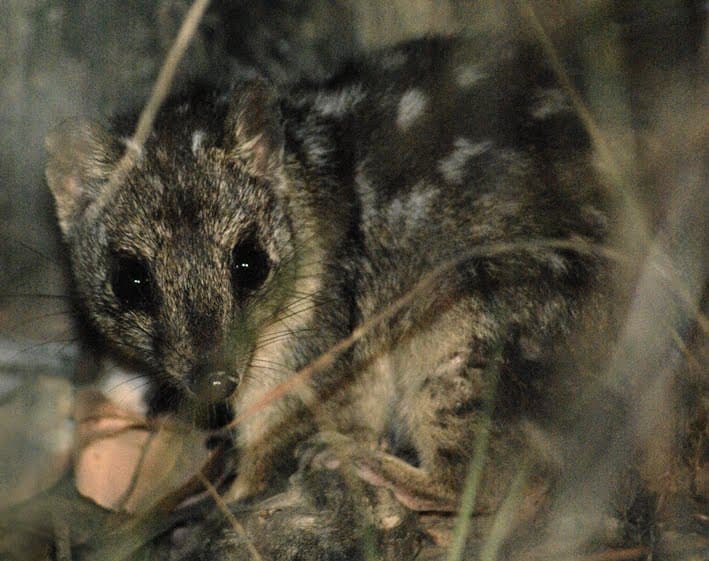
MT ZERO-TARAVALE WILDLIFE SANCTUARY, Queensland - The first 18 Northern Quolls have been released into a 950-hectare feral-predator-free fenced area at Mt Zero-Taravale Wildlife Sanctuary on Gugu Badhun Country, the opening step in a multi-year plan to build a secure mainland population of the endangered marsupial, Australian Wildlife Conservancy said in a press release dated 6 October 2026.
The quolls were released over a six-week period, the conservancy said, in a reintroduction that is to be split across two years. The work is supported by grant funding from the Colossal Species Reintroduction Fund and by donations from the organisation's supporters, and the conservancy said it was working with the Queensland Parks and Wildlife Service and Traditional Owners to secure founder animals.
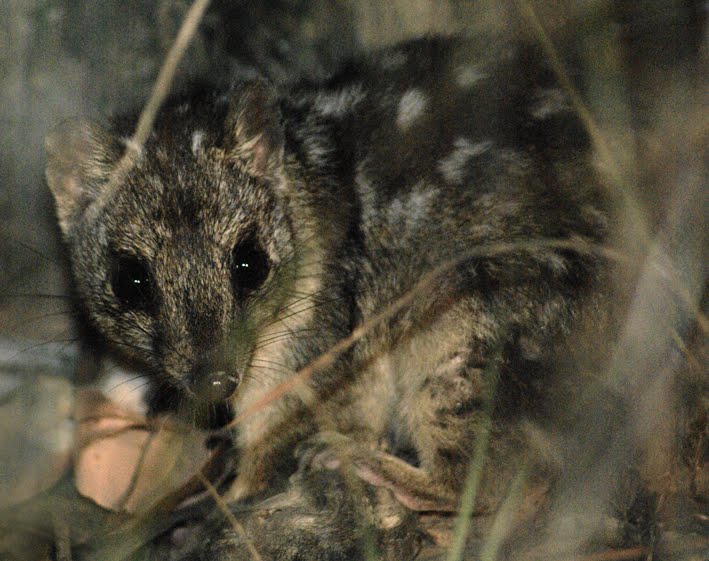
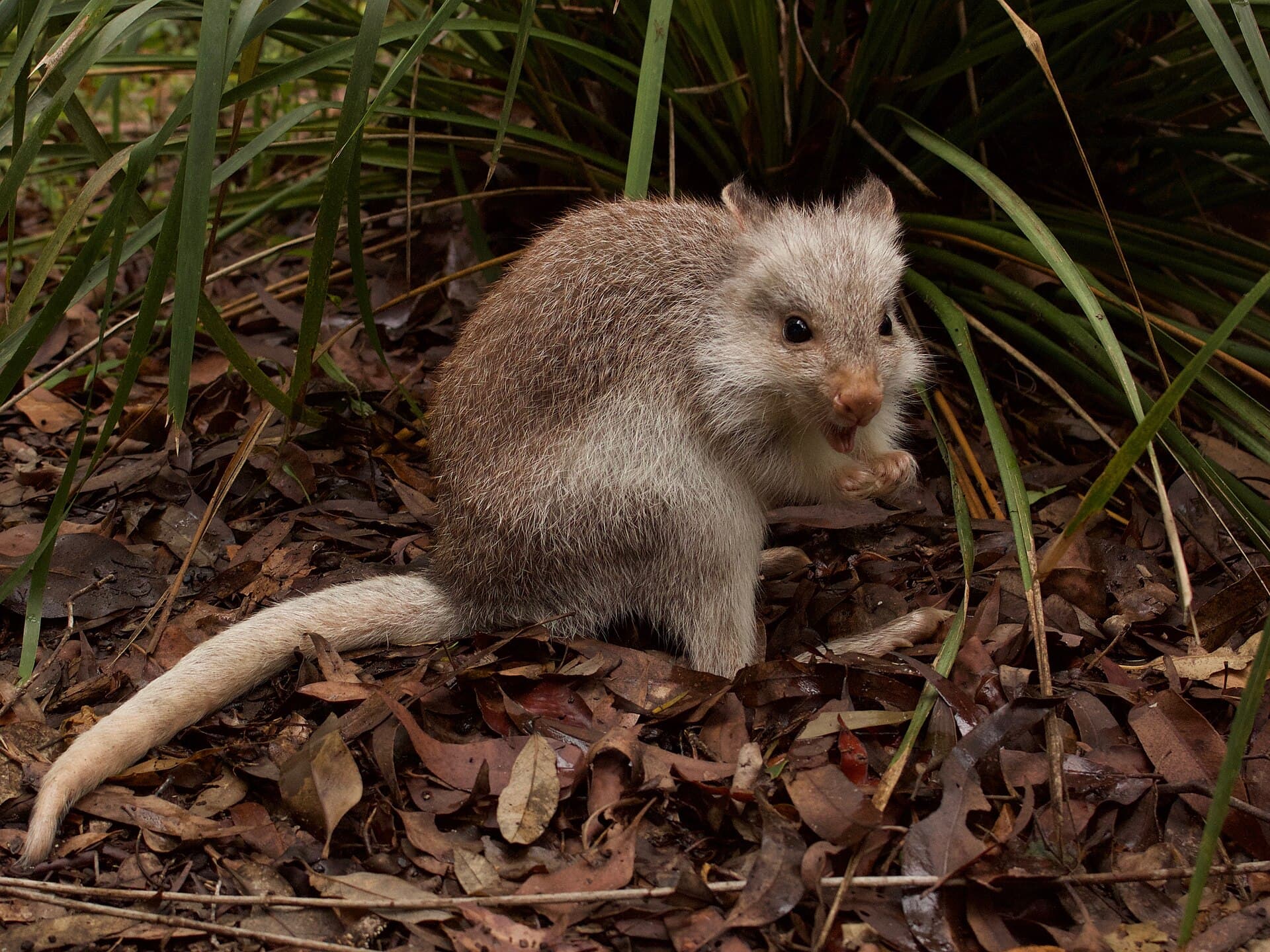
A Northern Quoll (Dasyurus hallucatus) photographed at night between Mareeba and Cairns, Queensland, in December 2009, used here for species identification. Not one of the 18 animals released at Mt Zero-Taravale and not an Australian Wildlife Conservancy photograph. Photo: Wildlife Explorer, via Wikimedia Commons (CC BY 3.0). Source page: https://commons.wikimedia.org/wiki/File:Dasyurus_hallucatus_-Queensland-8.jpg
The smallest of Australia's quolls, and listed as Endangered under the federal Environment Protection and Biodiversity Conservation Act, the Northern Quoll was once widespread across northern Australia. The conservancy said it has declined significantly since the 1930s under a range of threats, including predation by feral cats and poisoning from invasive cane toads.
"The Northern Quoll is an interesting species because while populations are persisting in Queensland, we're seeing significant declines in parts of northern Australia," said Dr. Jennifer Anson, the conservancy's senior ecologist who led the reintroduction. "The spread of cane toads across the north has compounded other threats facing the species, including predation by feral cats and inappropriate fire regimes."
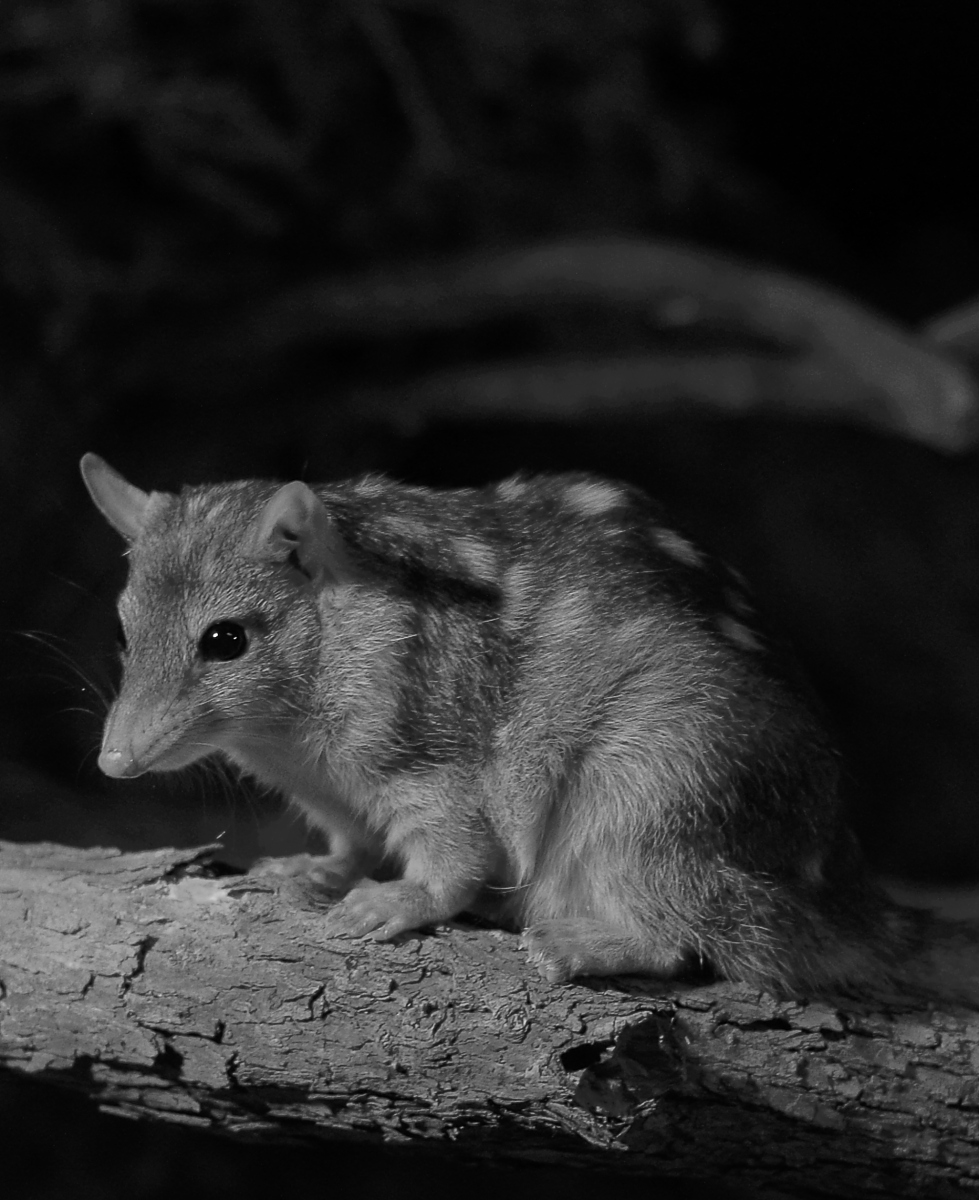
A Northern Quoll on a log at Perth Zoo, Western Australia, photographed in July 2012 under low light. Captive animal shown for species context only; not a Queensland animal and not from the Mt Zero-Taravale release. Photo: S J Bennet, via Wikimedia Commons (CC BY 2.0). Source page: https://commons.wikimedia.org/wiki/File:Northern_quoll_-_Dasyurus_hallucatus.jpg
The founders were female quolls collected from four source populations, including the conservancy's Brooklyn Wildlife Sanctuary and other locations in north Queensland. ABC News, which reported on the translocation the same day, said one of the four sites was Cape Cleveland, south of Townsville, and that females with pouch young were targeted. The conservancy said a small number of animals would be taken from each population every year to widen the genetic base of the new colony while easing pressure on the source populations, and that moves would mostly follow the breeding period, when males die off.
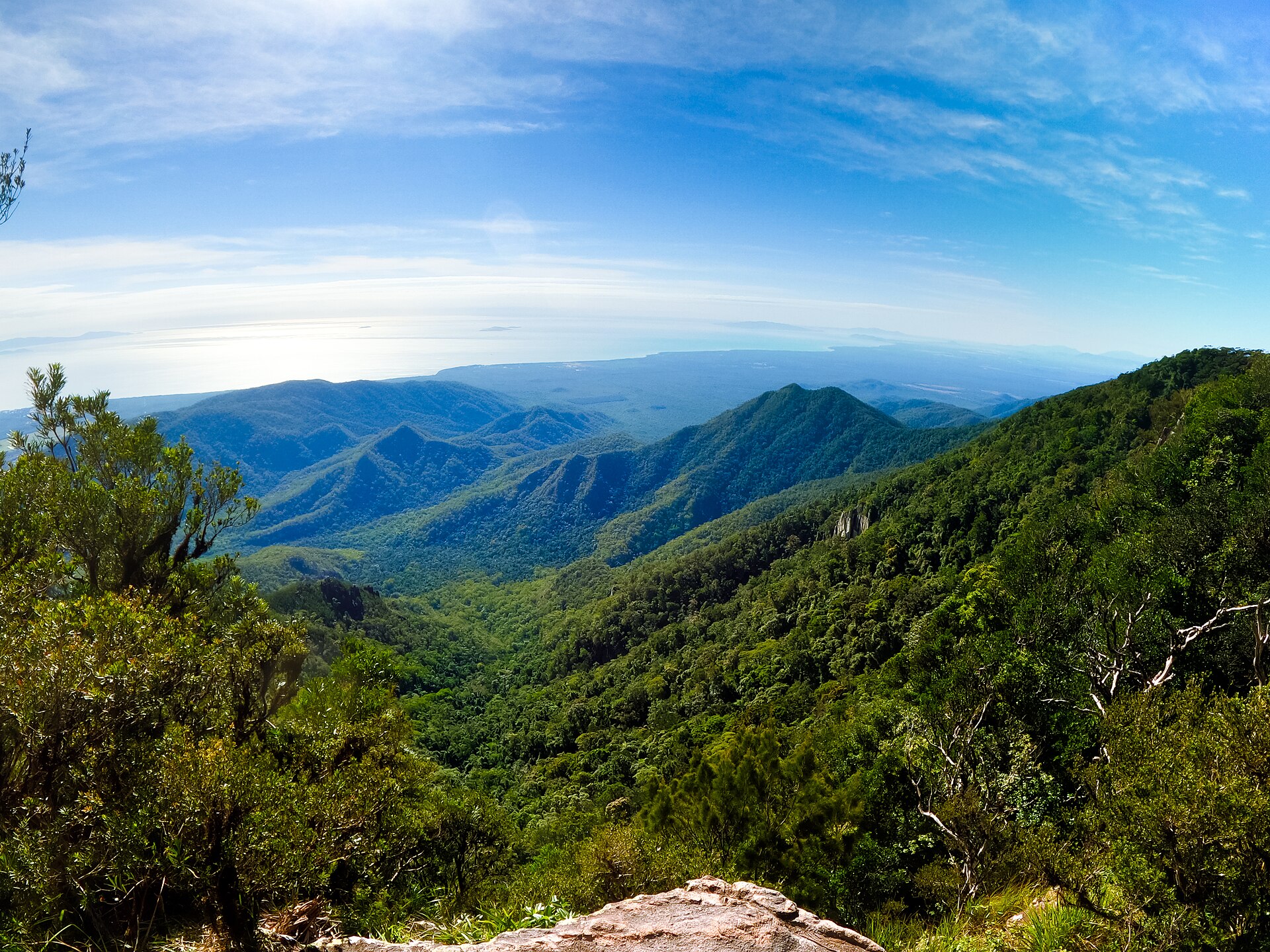
The view from the summit of Mt Halifax in Paluma Range National Park, north Queensland, August 2021. Regional context only: ABC News placed the conservancy's haven near Paluma, north of Townsville, but this is not Mt Zero-Taravale Wildlife Sanctuary or its fenced area. Photo: Tiaangobius20, via Wikimedia Commons (CC BY-SA 4.0). Source page: https://commons.wikimedia.org/wiki/File:Mt_Halifax_Summit.jpg
"We're expecting the quoll population to grow to as many as 300 individuals within the safety of Mt Zero-Taravale Wildlife Sanctuary's fenced area," said Felicity L'Hotellier, the senior field ecologist who carried out the reintroduction. "We're creating a stronghold for the species and restoring the local ecosystem by reinstating the quoll's ecological role as a native predator to the sanctuary."
Every animal was fitted with a telemetry collar before release, and the conservancy said its ecologists would also follow the population through routine cage trapping and motion-sensor camera surveys. It expects some quolls to self-release beyond the fence into the wider sanctuary, which would open up as much as 20,000 additional hectares of suitable habitat. Dr. John Kanowski, the conservancy's chief science officer, told ABC News that a successful reintroduction would create the only mainland population of the species free of feral cats, and that he hoped quolls would repopulate the Seaview Ranges between Townsville and Ingham by 2050.
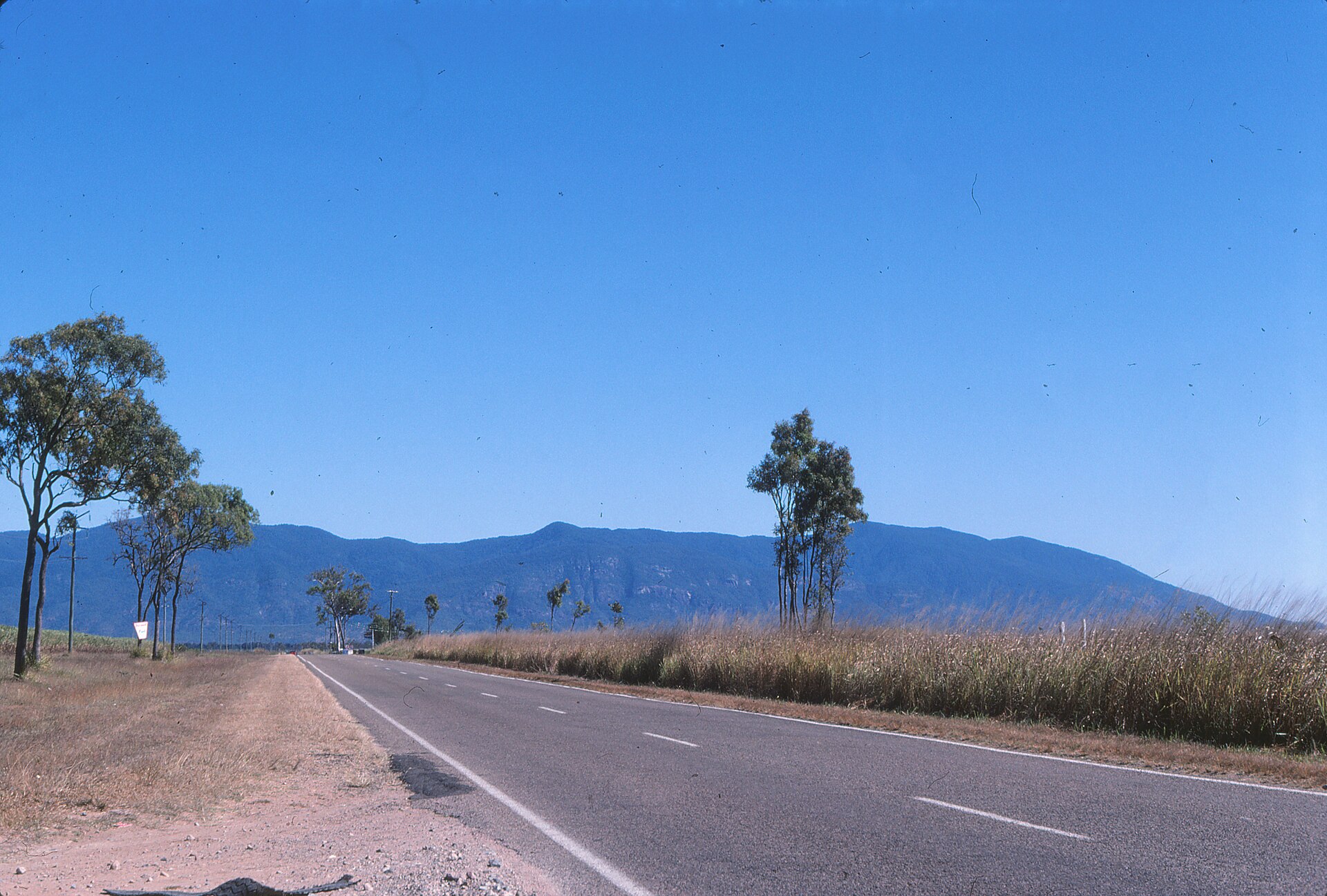
The Paluma Range seen from the Bruce Highway in north Queensland, from a photograph taken in July 1984. Regional context for the ranges between Townsville and Ingham; not Mt Zero-Taravale Wildlife Sanctuary or the fenced release area. Photo: John Robert McPherson, via Wikimedia Commons (CC BY-SA 4.0). Source page: https://commons.wikimedia.org/wiki/File:Paluma_Range_from_Bruce_Highway_north_Queensland_July_1984_IMG_0063.jpg
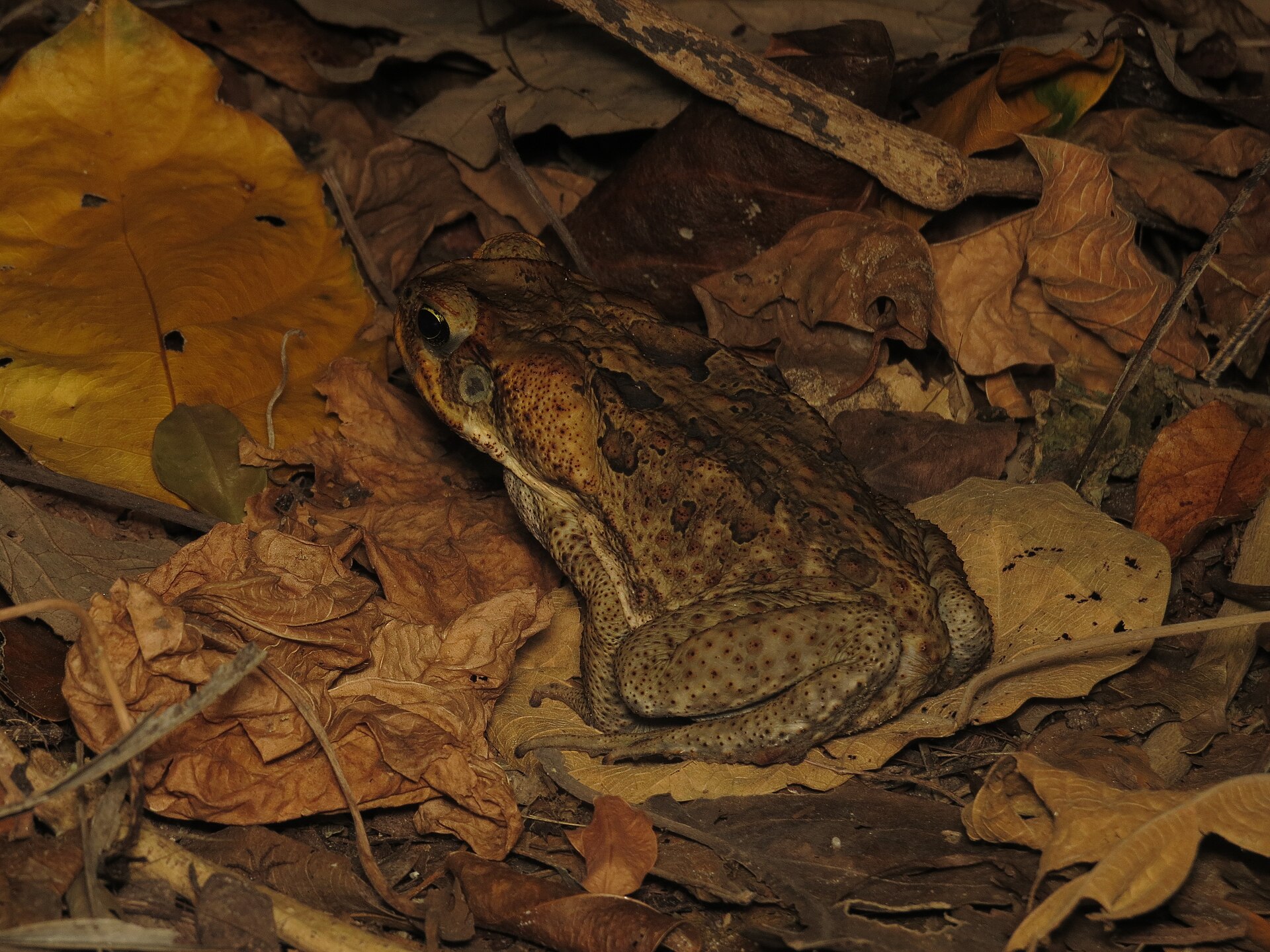
A cane toad (Rhinella marina) in leaf litter at Clump Point, Mission Beach, Queensland, November 2014. The invasive toad's poison is one of the threats the conservancy cites in the Northern Quoll's decline; not photographed at Mt Zero-Taravale. Photo: Donald Hobern, via Wikimedia Commons (CC BY 2.0). Source page: https://commons.wikimedia.org/wiki/File:Rhinella_marina_(15671841467).jpg
Dr. Andrew Pask, chief biology officer at Colossal, said in the release that the company was honoured to support the rewilding work, and noted separately that Colossal is pursuing gene-edited quolls resistant to cane toad toxin. The conservancy said the reintroduction contributes to its 2035 Strategy, which aims to expand its feral-predator-free haven network and increase threatened species reintroductions by 50 percent. It already protects Northern Quolls at Mornington-Marion Downs and Charley River-Artesian Range in Western Australia's Kimberley and at Brooklyn in north Queensland, and said the species was recently rediscovered at Piccaninny Plains Wildlife Sanctuary on Cape York, where it had not been detected in more than 80 years.
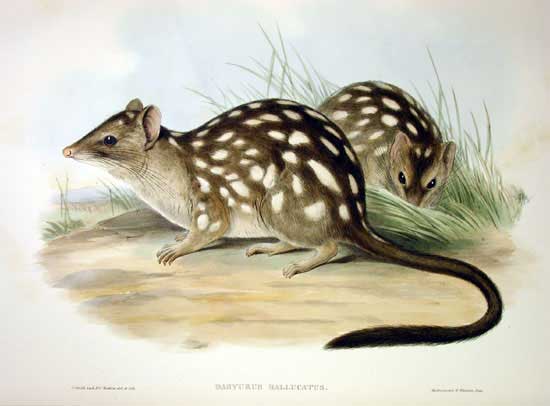
Hand-coloured plate of Northern Quolls by the naturalist John Gould, from Mammals of Australia, Vol. I, Plate 52, London, 1863. Public domain illustration. Artist: John Gould, via Wikimedia Commons (public domain). Source page: https://commons.wikimedia.org/wiki/File:Dasyurus_hallucatus_-_Gould.jpg
"At this stage, we're just excited to see the Northern Quoll back on the Coane Range," Ms. L'Hotellier said, "and look forward to seeing how they benefit from the safety of the sanctuary to increase their numbers."
The primary record is the Australian Wildlife Conservancy press release of 6 October 2026. Photographs of the release by Brad Leue of the conservancy appear on its page but are not reproduced here. The images above are Wikimedia Commons files chosen for species and regional context only.
- environment
- conservation
- australia
- wildlife
- mammals
- reintroduction
- queensland
- quolls
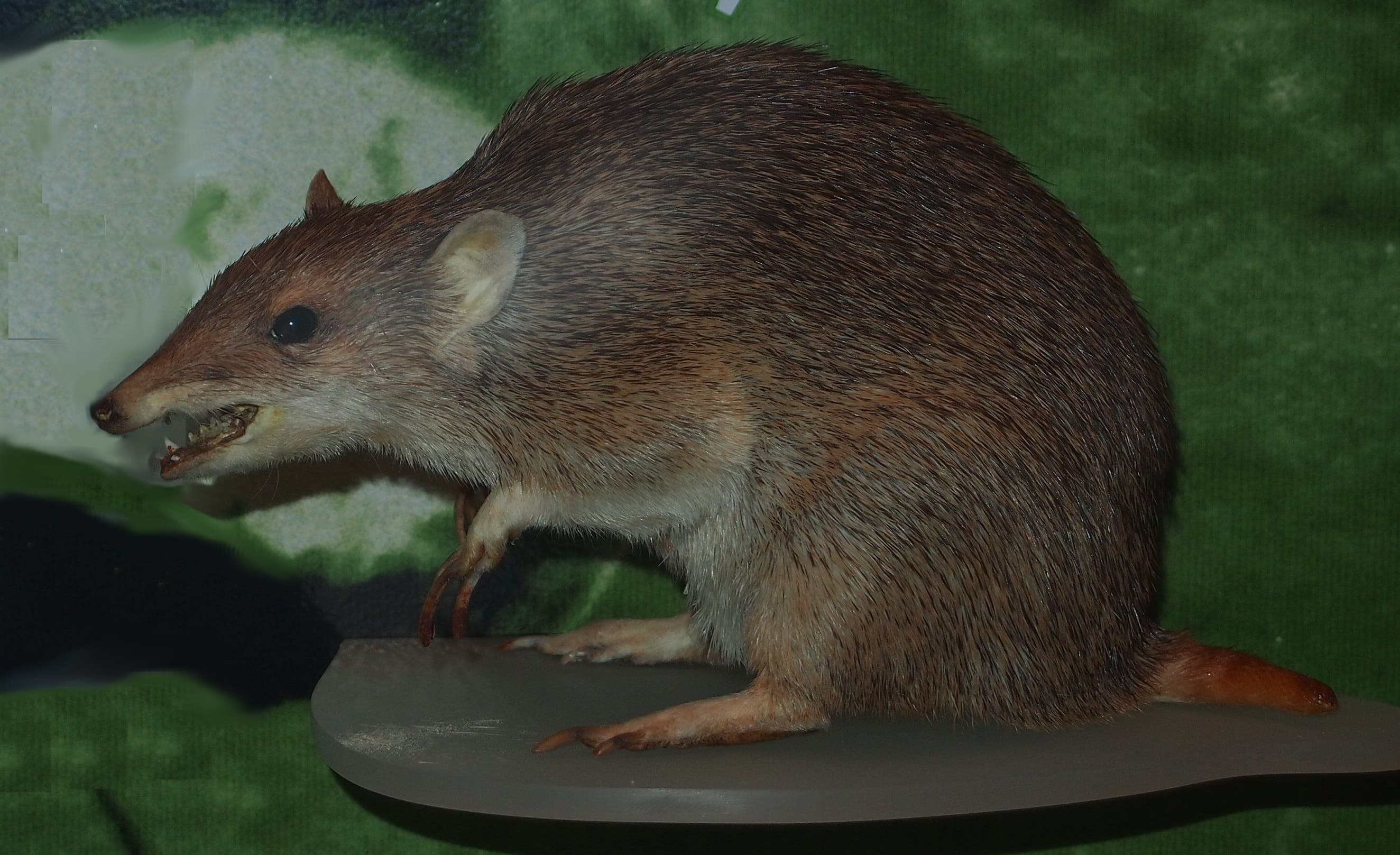


.jpg)
